
Why Is My Bird Bath Turning Red, Orange, or Black?
Why is my bird bath turning red, orange, or black? Red and pink are usually bacteria, orange is usually rust. Black has no institutional source pinning it down.
Why is my bird bath turning red is almost always one of two things, and neither one is the green algae the rest of this site's bird bath advice is written about. Red or pink is usually a bacterium, common and mostly harmless. Orange is usually rust from dissolved iron, not biology at all. Black is the one color this article cannot pin down to a specific cause, and it says so rather than guessing.
Why is my bird bath turning pink or red?
A bacterium, most likely, and a common one.
A municipal water authority's guidance on the same stain in a pet's water dish names it directly: The Attack of the Pink Slime is actually quite common, and is caused by a combination of airborne bacteria (called Serratia marcescens), mold, and yeast spores that thrive in damp environments. A bird bath is the same kind of target: a shallow, standing dish of water sitting outdoors, which is exactly the damp environment the source describes.
On the safety question, the same guidance is direct: it's been found in some cases to cause illness, that's usually not the case unless you have a compromised immune system. That line was written about a pet's water dish, not a wild bird's, and no source checked for this article states a position on Serratia marcescens and birds specifically. The bounded version is the honest one: a common, low-risk bacterium in a pet's water is not evidence of anything worse in a bird's.
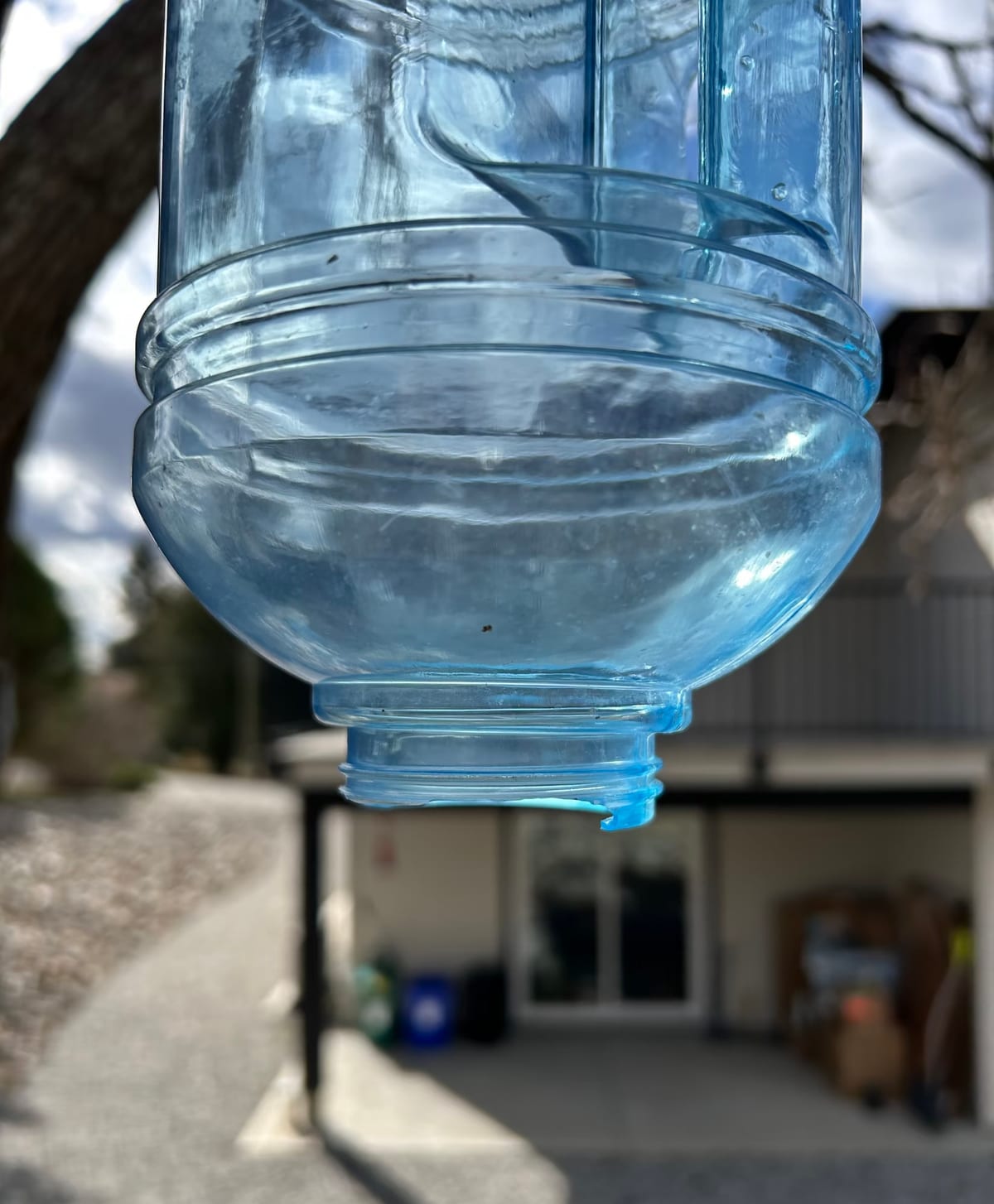
Why is my bird bath turning orange?
Rust, most likely, and not a living thing at all.
Penn State Extension's guidance on slime in household water names the mechanism: Iron bacteria use dissolved iron or manganese in groundwater to grow, producing a bacterial slime along the way. What that slime looks like is stated plainly: Iron bacteria can also cause reddish, yellow, brown, or gray deposits or orange or opaque slimy strands inside toilet tanks or orange-colored water.
That page is written about toilet tanks and well water, not bird baths, and it never mentions one. The connection to a bird bath is this site's own reasoning, not Penn State's: the same iron-carrying water that stains a toilet tank stains anything else it sits in long enough, and a bird bath filled from a hose bib on the same iron-bearing supply is no exception. On the safety side, Penn State's own framing carries over cleanly, since it is a statement about the bacteria in general rather than about any one fixture: these bacteria can be off-putting, they are typically considered more of a nuisance than a health hazard.
Why does my bird bath turn black?
Here the honest answer is that this article cannot say, and it is stating that rather than guessing.
Black staining in household water is commonly attributed to manganese, a close relative of the iron bacteria above, and general water-quality sources describe manganese deposits as dark to black. But the extension page that would have connected manganese specifically to that color has gone offline: articles.extension.org no longer resolves at all, not merely blocked, and no replacement carrying the same claim was found. Penn State's iron and sulfur bacteria page, the source used above for the orange case, mentions manganese only as a second element iron bacteria can use to grow, and does not describe a distinct black stain of its own.
So the honest statement is bounded rather than final: manganese is the leading suspect based on general water-quality literature, no institutional source checked for this article names it for a bird bath specifically, and nothing else checked names a different cause either. If that changes, this section will.
Is red or orange bird bath water safe for the birds?
Nothing checked here says otherwise, and that is worth stating plainly rather than hedging into a false alarm.
Both sources used above describe their subject as a nuisance rather than a hazard, in language written for a pet's water dish and a household water supply respectively, not for a wild bird. Neither is a clearance to leave the water as it is. The reasons to scrub and refill on a schedule do not depend on which color the residue happens to be: dirty water grows something, whatever the something is, and cleaning is the answer to that regardless of the diagnosis above. The same refill discipline matters even more in winter, when evaporation and freezing both shorten how long a bath goes between changes.
How is this different from the green algae already covered here?
Different mechanism entirely, which is the reason this is a separate article rather than an addition to the existing one.
The bird bath cleaning guide is about algae, a living plant-like organism that responds to sunlight and nutrient levels, which is why its fix is shade and a weekly scrub. Red, orange, and the suspected-black cases above are either a different organism entirely (Serratia) or not biological at all (iron and possibly manganese in the water supply itself). A bath in full shade can still turn orange if the water feeding it carries iron, because moving the bath does nothing to the water. The cleaning routine helps regardless, but it is not treating the same cause.
| Color | Most likely cause | Biological or mineral | Institutional source found for a bird bath specifically |
|---|---|---|---|
| Green | Algae | Biological | Yes, this site's own cleaning guide |
| Pink or red | Serratia marcescens | Biological | No; sourced for pet water dishes, applied here by inference |
| Orange | Iron bacteria, rust | Mineral | No; sourced for wells and toilet tanks, applied here by inference |
| Black | Suspected manganese | Mineral, unconfirmed | No source found naming this cause for any fixture's black stain specifically |
Questions people ask
Why is my bird bath turning red? Most likely Serratia marcescens, a common airborne bacterium documented in pet water dishes under the same damp, standing-water conditions a bird bath provides.
Bird bath water turning pink: is that the same thing? Yes. Pink and red describe the same organism at different concentrations, not two different problems.
Why is my bird bath turning orange? Usually iron in the water supply, oxidizing into rust-colored deposits the same way it stains a toilet tank or well fixture, per Penn State Extension.
Is red or pink bird bath water safe for birds? No source checked here says it is dangerous, but none was written about wild birds specifically. Treat it the same as any dirty water: clean it rather than debate the exact risk.
Why does my bird bath turn black? This article does not have a confirmed answer. Manganese is the leading suspect based on general water-quality sources, but no institutional source was found naming it for a bird bath, or for black staining generally, with enough specificity to state as fact.
Is this the same as the algae in my bird bath? No. Algae is a separate, living cause with its own article. These colors point to a different bacterium or to minerals in the water itself, neither of which shade or a scrub brush will fix at the source.
Why is my bird bath turning red, orange, or black: the short version
Red and pink point to a bacterium common enough to have its own name and its own reassurance from a water authority: a nuisance, not a hazard, in the contexts it has actually been studied. Orange points to iron in the water supply doing to a bird bath what it already does to a toilet tank. Black is the one color without a source willing to name it, and the honest move is to say so rather than invent a citation that does not exist.
None of the three is a reason to leave the water alone. Whatever produced the color, the same brush and the same schedule that handles algae handles this too, because the fix has never depended on knowing the exact name of what grew there.
This article contains no affiliate links. The mechanisms for red/pink and orange are each attributed to the institution that published them; the connection between those mechanisms and a bird bath specifically is this site's own reasoning, stated as such. The cause of black staining could not be sourced and is presented as an open question rather than a finding.