
Is It Illegal to Feed Birds in Your Backyard?
Is it illegal to feed birds? In your own yard, rarely. What wildlife-feeding ordinances target, why they set a feeder height, and how to check yours.
Asking whether it is illegal to feed birds in your backyard usually means someone has already told you it is. A neighbor, an HOA letter, or a headline about a city fining people for feeding wildlife.
In most places the answer is no. The ordinances that exist are aimed at deer, geese, and the animals that eat off the ground, and where they touch bird feeders at all, they usually set a height instead of a prohibition.
Is it illegal to feed birds in your backyard?
Rarely, and the people who compile municipal codes for a living say so plainly. General Code, which maintains code libraries for local governments, summarizes the landscape this way: Primarily in an effort to control vermin and dangerous conditions related to large animals in residential areas, most legislation enacted by municipalities relates to seasonal limitations, height restrictions, types of feeders allowed, and placement of feeders away from neighboring properties. Outright banning of bird feeders for wild birds occurs legislatively, but it is rare.
Rare is not never, and there is a real example further down. The common case, though, is a rule about how you feed, not about whether you may.
What are these ordinances actually aimed at?
Read the animals they list and the target becomes obvious.
New Braunfels, Texas has one of the stricter ordinances in the country, and the city describes its own scope: The ordinance (Sections 82-24 to 82-28) specifically prohibits anyone from intentionally feeding wildlife by placing food on the ground or within reach of any wildlife, including deer, ducks, geese, and squirrels. It reaches private land, not only parks: This ordinance applies to the entire city limits, including public parks, private property, and green spaces, and Violators are subject to a citation and fine of up to $500 for each violation.
The city is candid about why. Its stated concern is the deer population, and it reports that its Animal Welfare and Rescue Division handles roughly 500 deceased deer a year, most struck by vehicles.
The definitions in these codes tell the same story. Cottonwood Shores, Texas defines the regulated food as Any organic substance edible by wildlife. This includes: bread products, corn, fruit, oats, hay, nuts, wheat, alfalfa, salt blocks, feed, grain, vegetables, and commercially sold wildlife feed, or livestock feed.
Hay. Alfalfa. Salt blocks. That is a list written with hoofed animals in mind, and a tube of sunflower seed lands inside it only because the definition is broad.
Why is there a bird feeder height ordinance where you live?
Because height is how these ordinances tell a bird feeder apart from a deer feeder.
New Braunfels bans feeding across the whole city and then carves out an exception: The only exceptions to the ordinance are bird feeders with bird food that are placed a minimum of 5-feet off the ground, property owners who have a Land Hunting Permit, and approved wildlife management programs.
Cottonwood Shores does the same thing with a different number: This article does not apply to the placement of food into feeders kept at a minimum of 6 feet above the ground surface and intended for birds.
Two cities, two independent ordinances, the same mechanism, and a one-foot difference in where they drew the line. Neither number comes from a national standard, because there is not one.
That difference is the practical point of this whole article. If your city has a wildlife-feeding ban, the compliant move is often to raise the feeder rather than remove it, and the height that makes you compliant is a local number you have to look up. Getting it from a website that quotes one city is how people end up at five feet in a six-foot jurisdiction.
What shapes do these rules take?
Nearly everything in this area falls into one of five patterns, and knowing which one you are looking at tells you what to do about it.
| Shape | What it restricts | Does it reach your yard? | What compliance looks like |
|---|---|---|---|
| Public-place ban | Feeding in parks, on sidewalks, in the street | No | Nothing changes at home |
| Citywide ban with a feeder exemption | Feeding wildlife anywhere, birds excepted above a set height | Yes | Raise the feeder to the local number |
| Distance rule | Feeding within a set distance of a road or a property line | Sometimes | Move the feeder |
| Outright feeder prohibition | Owning or using a feeder at all | Yes | No compliant version exists |
| Rodent-control duty | Not feeding, but what the feeding attracts | Yes | Keep the ground clean |
Cottonwood Shores runs two of these at once. Alongside the height exemption it sets a distance rule: Feeding of wildlife is prohibited within 50 feet of a roadway.
The last row is the one people miss, because it never uses the word feeder in the prohibition. It is covered separately in what local codes require of you when a feeder attracts rats, and it is more likely to affect you than any ban on this list.
What does an outright ban look like?
Lackawanna, New York has one, and it is worth reading because it is unambiguous in a way most of these are not.
Section 66-19.1 of the city code states that It shall be deemed unlawful for any person to provide food or feed any nondomestic animal, including, but not limited to, birds, deer, rabbits, squirrels, turtles, ferrets and stray cats or dogs, and then removes the equipment as well: The use of bird feeders, wildlife feeders and/or outdoor pet food bowls shall be prohibited.
Birds are named in the first sentence and feeders are banned outright in the second. There is no height that fixes this.
One detail in the code's own history is telling. An editor's note records that this 2012 ordinance also repealed former § 66-19.1, Feeding of wild birds, added 2-22-2011. The city had a bird-specific rule for barely eighteen months before replacing it with a wider one. These codes change, which is the argument for checking yours rather than trusting an article about someone else's.
Can a neighbor make you take your bird feeder down?
Not on their own, and usually not by arguing that feeding birds is illegal.
Where a complaint gets traction is somewhere else. If your feeder is spilling seed and the yard has rodents, the relevant law is the rodent-control duty that falls on property owners, and in many places that obligation is written into the code, which gives a complaint somewhere real to land. The specifics, including a county code that names bird food as its own category, are in the article on rats under the feeder.
The other route is a private one, and it does not involve the city at all.
Federal law is a separate layer again, and it applies to birds instead of to people who feed them: some species may not legally be removed from a nest box while others may. The same statute decides what a property owner may do about a nest built somewhere inconvenient, and there the timing matters more than the location.
What can an HOA do that a city cannot?
HOA rules about bird feeders come from the covenants you agreed to when you bought the property, not from the city, so the answer sits in your own governing documents. No statute will settle it for you.
We looked for a citable legal authority on bird feeders and HOAs specifically, and could not find one. That absence is itself informative. Municipal codes are public and searchable, which is why every quotation above links to the ordinance text. Covenants are private contracts that differ community by community, so there is no general rule to cite and anyone offering one is generalizing from a single example.
What this means in practice: read your own CC&Rs, and check whether feeders are named. Where they are not, the clause an association typically reaches for is the general nuisance provision, and how much weight that carries depends entirely on how your documents define it. That is a question for the documents and, if it escalates, for a lawyer in your state. It is not something this site can answer. Renters face the same gap one layer down, since a lease is also a private contract, and the ordinance layer above it can reach a tenant on a balcony as directly as it reaches an owner.
How do you find the rule for your own city?
Three steps, and the second one is where most people go wrong.
1. Find your code. Most US municipalities publish through one of three platforms: eCode360, Municode, or American Legal Publishing. Searching your city's name plus "code of ordinances" reaches the right one.
2. Search for "feeding of wildlife", not "bird feeder". This is the step that matters. Bird feeders are rarely the subject of these ordinances. They appear inside the exceptions subsection of a wildlife-feeding article, so searching the term you care about misses the provision that governs you.
3. Read the exceptions, not just the prohibition. Wildlife feeding ordinance exceptions are where the numbers live. The prohibition tells you a ban exists. The exceptions tell you whether you are inside it, and that is where the height numbers live.
If your city has no wildlife-feeding article at all, the search is over, and the rules that still apply to you are the rodent and nuisance provisions that apply to every property regardless of feeders.
What this article is and is not
Five jurisdictions are quoted here out of roughly nineteen thousand incorporated places in the United States. They were chosen because they illustrate different shapes, not because they are representative, and one of them rewrote its own ordinance within eighteen months. Nothing here is legal advice, and no article can tell you what your city requires. What it can do is tell you what to search for and which part of the document to read.
Questions people ask
Is it illegal to feed birds in your backyard? In most places, no. General Code, which compiles municipal codes, states that outright bans on bird feeders occur but are rare, and that most legislation instead regulates seasonal timing, height, feeder type, and placement relative to neighboring properties.
Are bird feeders banned in my city? Yes, and some do. Lackawanna, New York prohibits the use of bird feeders outright. New Braunfels, Texas bans wildlife feeding across the entire city including private property, but exempts bird feeders placed at least five feet off the ground.
How high does a bird feeder have to be to be legal? It depends on the jurisdiction, and there is no national standard. New Braunfels sets five feet, Cottonwood Shores sets six. Check the exceptions section of your own city's wildlife-feeding ordinance.
Can a neighbor complain about bird feeders? They can complain, but a complaint usually gains traction through rodent-control or nuisance provisions. A feeding ban is rarely the lever. Keeping spilled seed cleared up removes the most common basis.
Can an HOA ban bird feeders? An HOA's power comes from its governing documents rather than from state or city law, so the answer is in your CC&Rs. There is no general rule that applies across associations.
Why do wildlife-feeding ordinances exist at all? Mostly to reduce deer, waterfowl, and vermin problems in residential areas. New Braunfels cites vehicle collisions with deer, reporting that its animal services division handles about 500 deceased deer a year.
Is it illegal to feed birds in your backyard: the short version
Almost certainly not. The laws that look alarming in headlines are wildlife-feeding ordinances aimed at animals that eat off the ground, and they hand bird feeders an exemption defined by height. Five feet in one Texas city, six in another, with no national number behind either.
Outright feeder bans exist and are rare. What is far more common, and more likely to land on you, is the duty every property owner already has to keep rodents away from food, which is a separate body of law that never mentions the word feeder.
So the useful hour is not spent worrying. Open your city's code of ordinances, search "feeding of wildlife", and read the exceptions subsection. If there is a height in there, get a tape measure. If there is no such article, the questions that actually govern your feeder are about squirrels, windows, and where the seed lands. Is it illegal to feed birds where you live? Ten minutes with the code will tell you, and worrying will not.
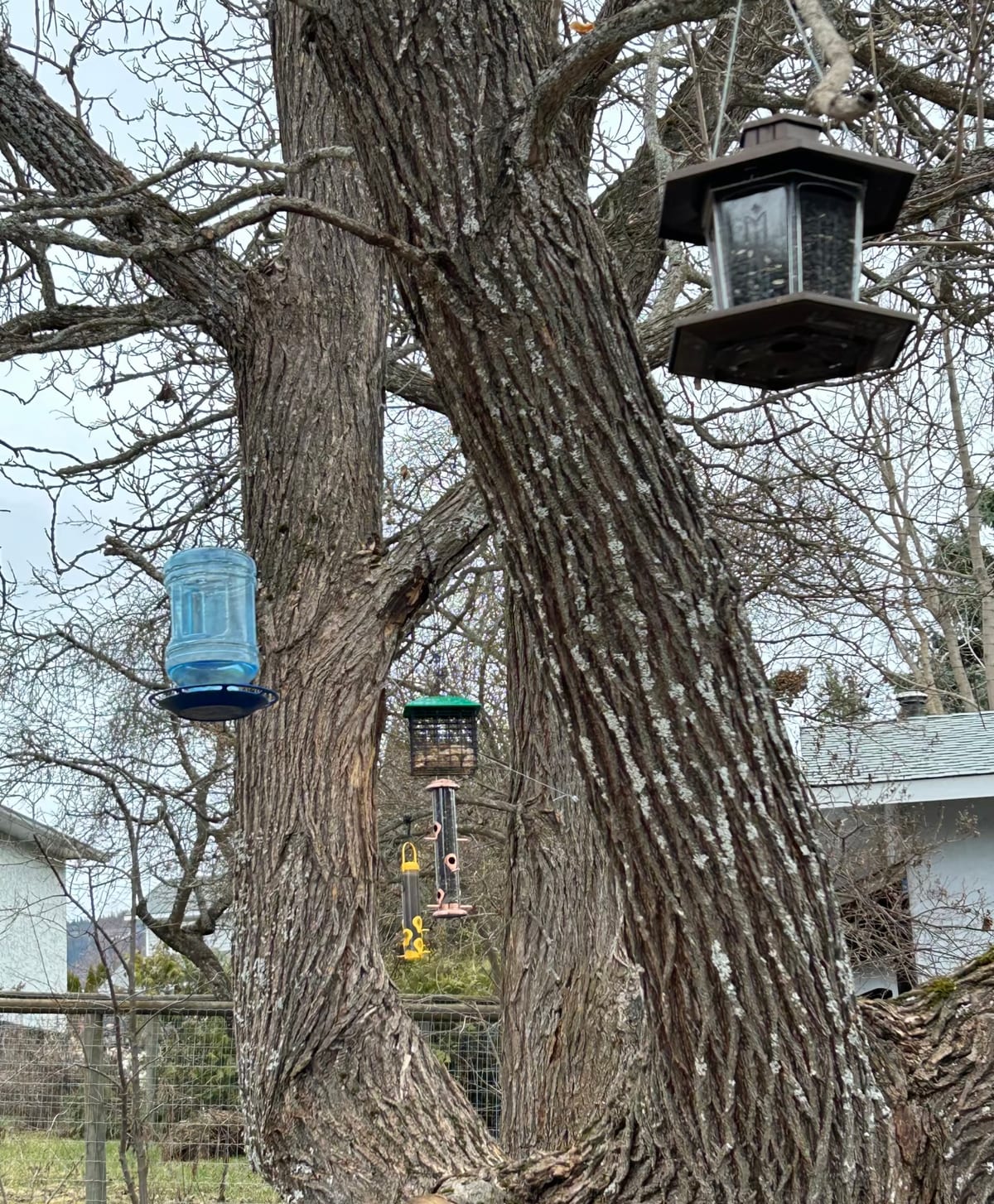
The photograph in this article was taken by our contributor Kevin Hu and is used with permission. More on where our photographs come from.