
Suet for Birds: What It Is, Who Comes for It, and When to Stop
Suet for birds is beef fat, and it feeds the insect eaters. What the forms mean, how high to hang it, and the second reason to pull it in hot weather.
Suet for birds is animal fat, and it is aimed at a specific audience: the birds that would be eating insects if there were any. That is why it earns its place in cold weather and loses it in summer.
The summer rule has two reasons behind it, and most articles print only the first one. The second is about feathers.
What suet actually is
Beef fat, and usually one particular part of the animal.
Project FeederWatch: Most suet is beef kidney fat, which is inexpensive and available at many meat counters. That is the raw version, and it is the cheapest way to buy it if you have a butcher nearby.
The version most people actually buy is manufactured. FeederWatch again: Suet also can be purchased as processed cake that includes seeds, berries, and other ingredients.
The distinction matters more than it looks, because processing is what decides whether the block survives warm weather. That is the seasonal deadline this site covers separately, and it is the single most consequential difference between two blocks that look identical on the shelf.
Which birds suet for birds actually reaches
Insect eaters, which is a different guest list from the seed feeder ten feet away.
Project FeederWatch states the category: Suet is a good choice for attracting insect-eating birds.
Audubon names them. Writing for Audubon, Steve Kress lists what turns up: Suet (beef fat) attracts insect-eating birds such as woodpeckers, wrens, chickadees, nuthatches, and titmice.
Audubon's own guide to identifying suet visitors puts one family at the front: Woodpeckers are some of the most frequent suet guests, and the Downy Woodpecker is probably the most frequent. It also notes that Carolina Wrens will happily swing by a suet feeder.
| Group | Why they come | Also at your seed feeder? |
|---|---|---|
| Woodpeckers | The closest thing to a bark-foraging insect meal | Rarely, and only for sunflower |
| Nuthatches | Same, and they feed clinging head-down | Yes |
| Chickadees and titmice | Fat is the winter currency | Yes |
| Wrens | Insect eaters year round | Almost never |
| Starlings | Because it is fat and they are opportunists | Yes, and that is the problem |
That last row is the reason suet cage design matters. A cage open only at the bottom filters by feeding posture rather than by size, which is the one exclusion mechanism on this site that costs nothing.
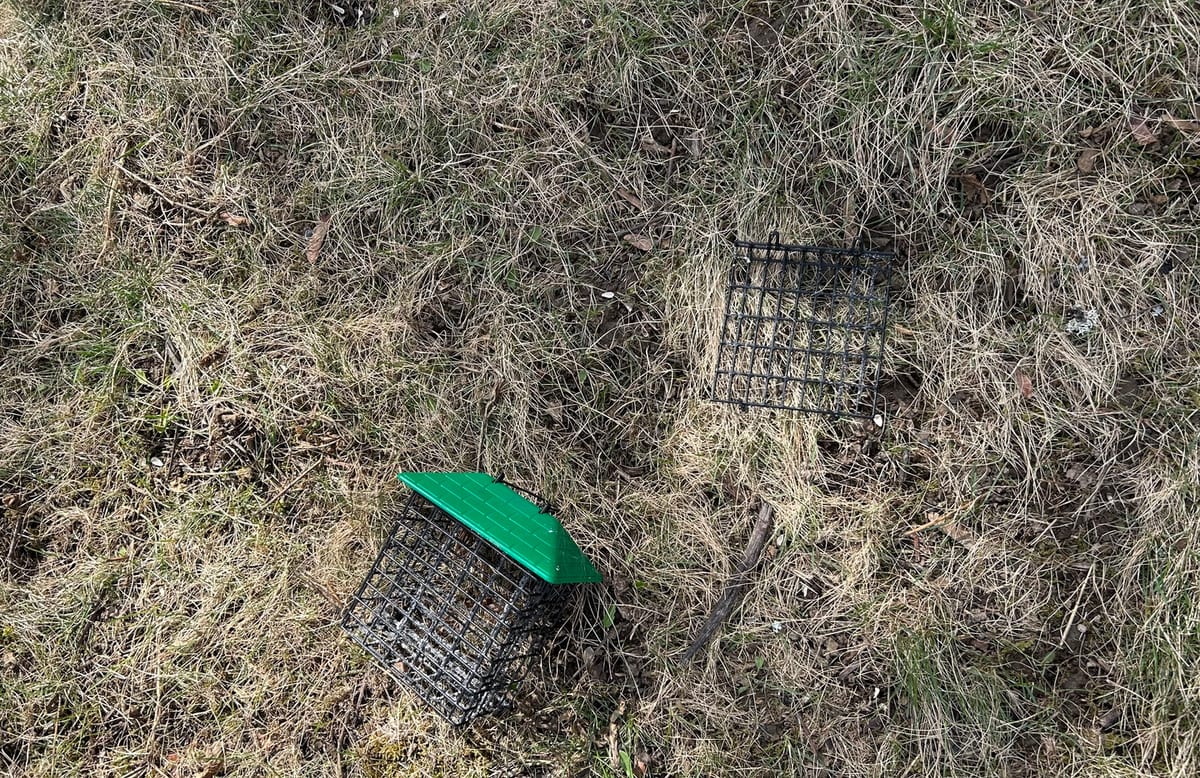
Suet cake vs suet dough, and the other names
The shelf gets confusing at this point, and it is worth being careful about what can actually be claimed.
The distinction the sources actually support is raw versus processed. FeederWatch describes plain beef kidney fat on one side and processed cakes with seeds and berries on the other, and attaches the warm-weather caution specifically to suet that has not been specially processed.
Beyond that, the words on the packaging are marketing rather than standards. Cake, block, ball, plug, and dough are shapes and consistencies, and no source we found defines them in a way you could hold a manufacturer to. What you can read off a label reliably is whether the product claims to be processed for warm weather, and what is mixed into it.
So the useful question in the aisle is not which word is on the front. It is whether the block is plain rendered fat or a manufactured cake, because that answers the only question with a consequence attached.
How to hang a suet feeder
Five feet up, and the reason is not the birds.
Two things in that sentence are easy to skim past. The height rule exists for dogs, which is a hazard almost nothing else in bird feeding accounts for. And the onion bag is offered as a legitimate alternative to a purpose-made cage, which is worth knowing if you are making your own blocks in a shape no cage fits.
Three practical notes follow from the hardware:
A cage is the only delivery system. There is no tube or hopper version of suet. The block sits in a cage, in a bag, or pressed into a log.
Grease transfers to everything it touches. The cage, the hook, the pole below it. This is the same substance that Humane World for Animals warns about in a different context, where grease on feathers cannot be preened out.
It needs cleaning like anything else. Fat in a wire grid holds debris, and the joints are where it collects.
The summer question, and its second reason
Everyone knows suet comes down when it warms up. Fewer people know why, and the second reason is the one that should decide it.
Audubon gives both in one sentence: Do not put out suet during hot weather as it can turn rancid; also, dripping fat can damage natural waterproofing on bird feathers.
Rancid fat is a food-safety problem. Melting fat is a plumage problem, and it is the more direct harm. A bird's insulation and its ability to shed water are both properties of feather structure, and fat that mats them takes both away. That is the same category of harm as a greased pole, arrived at from the opposite direction: there, a substance we apply; here, a food we hang.
On the specific temperature, we are going to leave a gap rather than fill it badly. The figure repeated everywhere is that suet should come down above 50 or 55 degrees Fahrenheit. We could not trace that number to a primary source in any of the five pages consulted for this article. The rule with a source behind it is qualitative: not in hot weather, and processed cakes tolerate more than plain fat does. Where the line sits for your climate is a judgment the sources do not make for you.
What to offer instead in summer
Audubon names a substitute and gives the proportions: Peanut butter is a good substitute for suet in the summer. Mix one part peanut butter with five parts corn meal and stuff the mixture into holes drilled in a hanging log or into the crevices of a large pinecone.
And it reaches a similar audience: This all-season mixture attracts woodpeckers, chickadees, titmice, and occasionally warblers.
Two published recipes
Both are what a drilled log feeder gets packed with, which is the one traditional homemade design that ages acceptably.
A homemade suet recipe for birds is worth having for two reasons: it costs less per block, and it lets you make a shape that fits whatever you already own. Both of these come from organizations rather than from us, and the quantities are transcribed rather than adapted.
Audubon's vegetarian version
Audubon offers it as a substitute for the animal-fat original: With this vegetarian version of suet (traditionally it's made from rendered animal fat) you can provide the perfect winter substitute for birds that normally feast on insects, aimed at birds such as woodpeckers, wrens, chickadees, nuthatches, and titmice.
| Ingredient | Amount |
|---|---|
| Shortening, palm oil free if you can find it | 1 1/2 cups |
| Nut butter, any kind | 3/4 cup |
| Wild bird seed | 3 1/2 cups |
| Quick oats | 1 cup |
| Corn meal | 1/2 cup |
Melt the shortening and nut butter together, stir into the dry mix, spoon into an ice cube tray, and freeze.
Marvel Meal
Illinois Extension publishes this one and credits Penn State Extension for it. The proportions are different enough from Audubon's to be worth having as an alternative: 1 cup peanut butter, 1 cup vegetable shortening, 4 cups cornmeal, 1 cup flour, and a handful of sunflower seeds if you want them.
What makes it useful is that it does not need a cage. Illinois Extension: Press the peanut butter mixture into holes of a log or smear it directly on tree trunks, and Marvel Meal can be frozen in blocks and placed in suet feeders or on a feeder tray.
A homemade block is also the case where the onion bag matters, since nothing you press into an ice cube tray will match a commercial cage.
Questions people ask
What is suet made of? Beef fat, most often kidney fat, per Project FeederWatch. Processed cakes add seeds, berries and other ingredients to that base.
What birds eat suet? Insect eaters: woodpeckers, wrens, chickadees, nuthatches and titmice, per Audubon. Woodpeckers are the most frequent visitors, with the Downy Woodpecker the most frequent of those.
What is the difference between suet cake and suet dough? Those are packaging words rather than defined categories. The distinction with a consequence is raw beef fat versus a processed cake, because processing is what determines warm-weather tolerance.
How high should a suet feeder hang? At least five feet from the ground, which Audubon recommends specifically to keep it out of reach of dogs.
Can I put suet out in summer? Not plain suet. Audubon advises against suet in hot weather for two reasons: it turns rancid, and dripping fat damages the waterproofing of bird feathers. Peanut butter mixed one part to five with corn meal is the substitute it names.
Is there a temperature limit? No primary source we consulted gives one. The widely repeated 50 or 55 degree figures could not be traced to an original, so this article does not print a number.
Can I make my own suet? Yes. Audubon publishes a vegetarian version built on shortening and nut butter, and Illinois Extension publishes Marvel Meal, credited to Penn State Extension. Both are above.
Suet for birds: the short version
Suet for birds is beef fat, usually kidney fat, and it exists to feed the birds that eat insects the rest of the year. That is why the woodpeckers arrive and the finches ignore it.
Hang it at least five feet up, in a cage or an onion bag, and remember that the cage is the entire delivery system. If starlings clear it out, the fix is a cage open only at the bottom rather than a different block. Which woodpeckers this actually reaches, and which ones no feeder reaches, is a species question.
And take it down when it warms, for the reason nobody prints: rancid fat is unpleasant, but melting fat mats the feathers a bird depends on to stay warm and dry. If you want to keep feeding the same birds through the summer, Audubon's peanut butter and corn meal mixture does the job without leaving anything on their plumage. Suet for birds is a winter food with a summer warning attached, and the warning is the part that gets left out.
This article contains no affiliate links. Recipe quantities are transcribed from the organizations credited above. The photograph was taken by our contributor Kevin Hu and is used with permission.