
Bird Feeder Types: Which Birds Each One Lets In
Bird feeder types work as guest lists: perch length, hopper size, and suet cage design decide which species can feed and which are shut out.
The useful way to think about bird feeder types, and about which bird feeder for which birds, is that each one is a guest list. A feeder does not simply hold seed. Its perch length, its port size, the height of its walls, and which side you can reach the food from all decide which species can eat there and which cannot. Choosing a feeder is choosing who shows up.
That framing also explains why "best bird feeder" is close to meaningless as a question. Best for whom.
Tube vs hopper feeder: perch length is the guest list
A tube feeder is a cylinder with ports down the sides, and the detail that matters is the size of the perches beside those ports. Project FeederWatch: Feeders with short perches accommodate small birds such as finches but exclude larger birds such as grackles and jays.
That is the whole mechanism. A short perch gives a finch or a chickadee somewhere to stand and gives a grackle nowhere, and gives a cardinal nowhere either, which is the hardware half of what to do about a flock of grackles. If large birds are emptying your feeder in a morning, perch length is the specification to look at before anything else.
Perch length decides who can get to the food. Who wins once they are both standing there is a separate hierarchy with its own research behind it.
Hopper feeders: size decides who fits
A hopper holds seed behind walls with a roof over it and a ledge running around the base. The capacity keeps it filled for longer, and the size determines the guest list.
Large ones are inclusive: Large hoppers attract most species of feeder birds and will allow larger species, like doves and grackles to feed.
Small ones filter: Small hoppers will attract smaller birds while preventing larger species, like grackles, from comfortably perching.
The phrasing on the small hopper is doing careful work. It does not lock grackles out the way a short perch does. It makes perching uncomfortable, which is a softer form of exclusion and works accordingly.
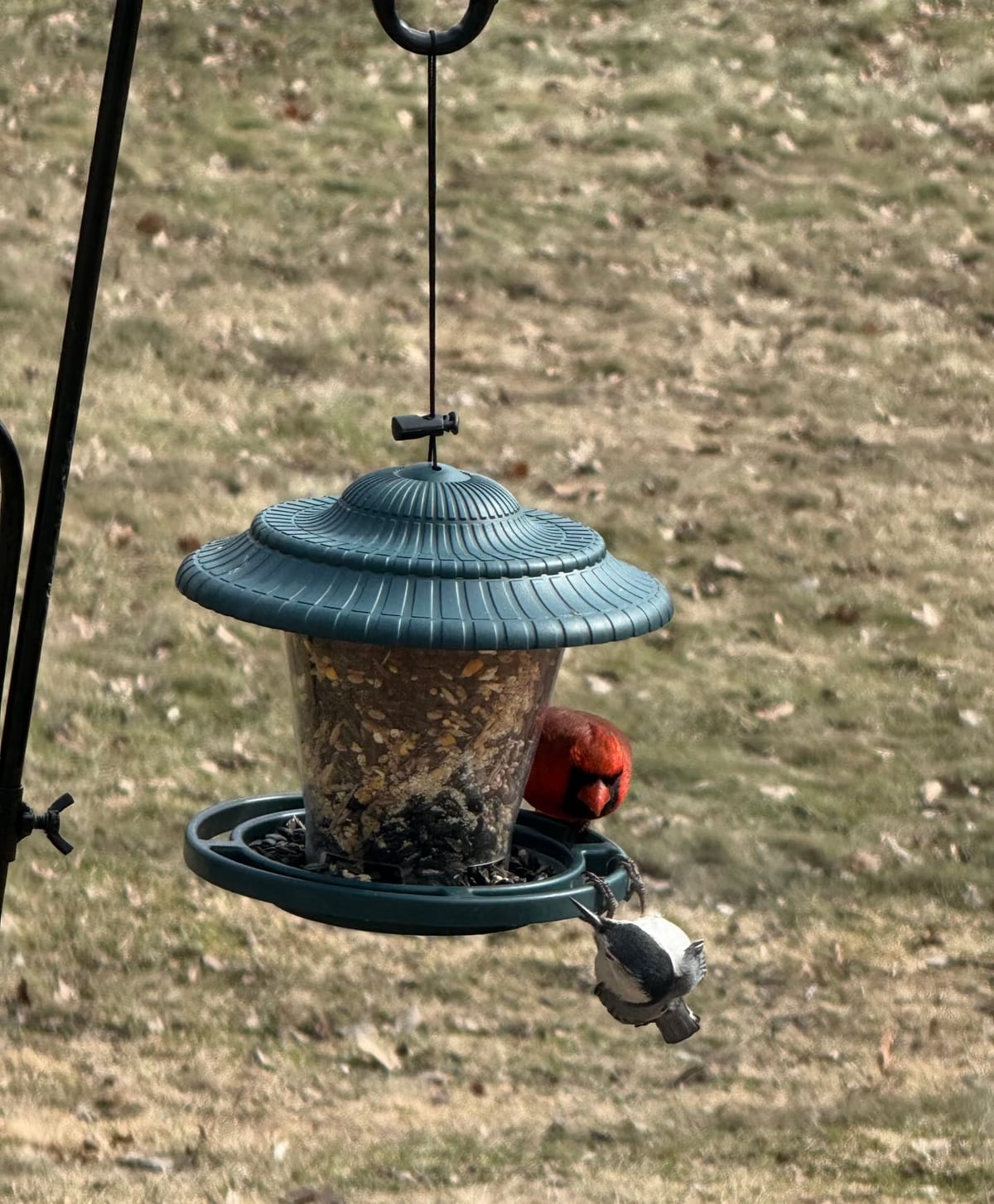
Platform feeders and the birds they bring in: the widest guest list
A tray is an open platform with no walls, no roof, and no perch requirement, which makes it the most inclusive design available. Trays attract most species of feeder birds. Placed near the ground, they are most likely to attract juncos, doves, and sparrows, which is the arrangement doves require.
Height changes the guest list on the same piece of equipment. Mounted high, a tray serves the birds that would use any feeder. Set low, it starts serving the ground-feeding species that mostly ignore feeders.
The cost of inclusiveness is that a tray excludes nothing. Large birds land on it comfortably, squirrels find it trivial, seed sits exposed to rain, and droppings land where the food is. A tray is the design with the most upkeep attached, which connects directly to how often the thing needs cleaning.
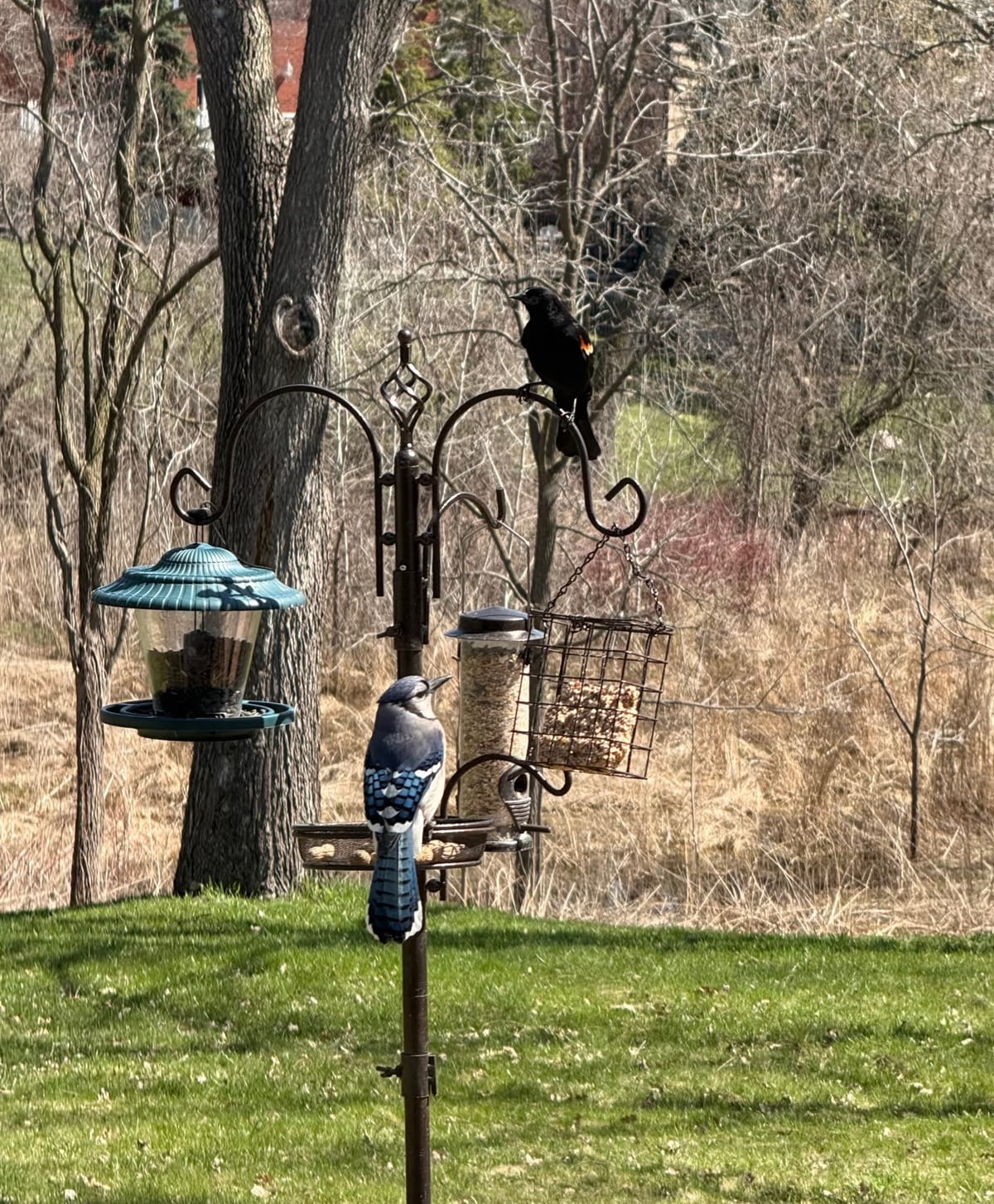
The suet feeder that shuts starlings out, by direction not size
Suet is fat, offered in a cage rather than a container, and the cage design does something none of the seed feeders manage.
A standard cage admits anything that can cling to wire, starlings included. But a cage closed on top and open only underneath forces a bird to feed hanging upside down, which starlings find difficult. FeederWatch describes cages accessible only at the bottom as starling-resistant, and notes that they still allow woodpeckers, nuthatches, and chickadees to feed by clinging upside down.
The exclusion is not based on size or weight. It is based on a physical skill some species have and others lack. Look again at the nuthatch in the photograph above, hanging head-down off the rim as though it were the obvious way to eat.
As an Amazon Associate, The Feeder Log earns from qualifying purchases. The one link below goes to Amazon; we have not used the feeder and link it as an example of the design just described.
The design goes by the name upside-down suet feeder, and a bottom-access suet cage of that kind is one. What to look for is a closed top and an open underside, since that geometry is the whole mechanism.
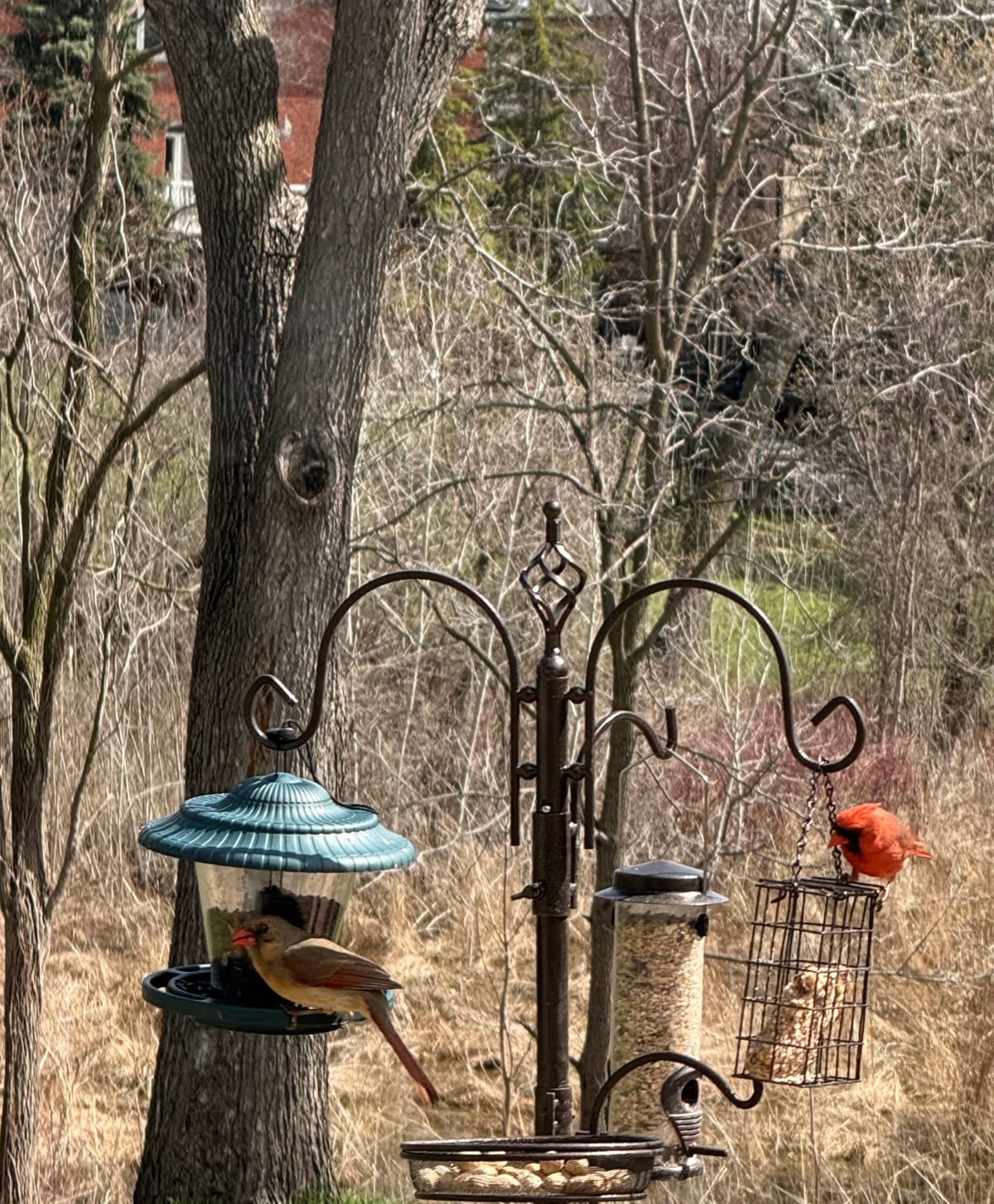
Nyjer needs its own ports
Nyjer is small enough to pour straight through a standard opening. FeederWatch is direct about it: Note that special (small) feeding ports are required for nyjer seed in order to prevent spillage.
So offering nyjer at all requires a feeder built for it, since a standard one simply spills the seed onto the ground. It is one of the clearest cases of seed and feeder being a single decision rather than two.
The birds that will not use a feeder at all
This is the fact most feeder guides leave out entirely, and it reframes what a feeder can do.
No feeder brings those birds in, because the problem is not which feeder you bought. Some species feed on the ground and will not perch on equipment, so what serves them is a low tray or seed scattered where they forage. What to scatter is a separate question with its own answers in types of bird food.
That has a second implication worth noticing. The seed that falls under a feeder is what a whole category of birds actually eats, which sits in tension with the fact that accumulated debris on the ground is also a hygiene problem. The resolution is offering ground feeders clean seed deliberately rather than leaving spoiled hulls to pile up.
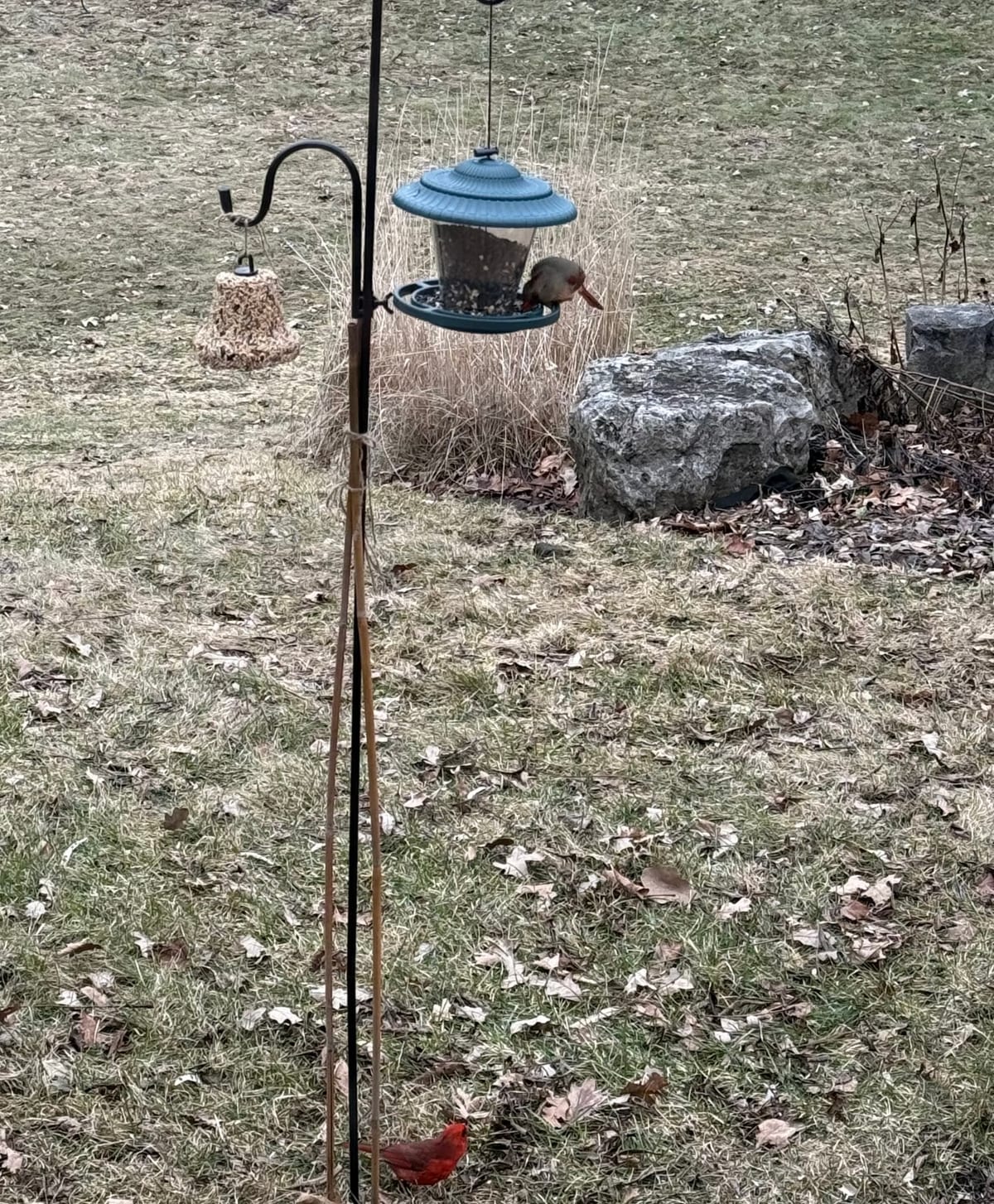
A camera does not create a new category here. A smart bird feeder is one of these designs with electronics added, and the guest list is still decided by its perches and ports.
What bird feeder types are really deciding
The pattern across all of them is that a feeder is a filter. What differs is which property it filters on, and that is the column worth reading.
| Feeder type | Filters on | Lets in | Keeps out | The cost |
|---|---|---|---|---|
| Tube, short perches | Perch length | Finches, chickadees, titmice | Grackles and other large birds | Nothing for small birds, but you give up the big ones you may have wanted |
| Hopper, large | Nothing much | Most feeder species, doves and grackles included | Very little | Emptied fast, and the guest list is not yours |
| Hopper, small | Perching comfort | Smaller birds | Discourages grackles rather than excluding them | A soft filter, so it leaks |
| Platform or tray | Nothing at all | The widest range, and ground feeders if set low | Nothing | Squirrels, weather, and droppings in the food |
| Suet cage, bottom access | Feeding posture | Woodpeckers, nuthatches, chickadees | Starlings, which cannot feed upside down | None worth naming, which is why this one is unusual |
| Nyjer feeder | Port size | Finches | Everything that cannot use a tiny port | It only does the one job, and a standard feeder spills nyjer |
The suet row is the interesting one. Every other design filters by size, weight, or comfort, all of which are soft or costly. The bottom-access cage filters by a skill, and a skill is not something a starling can grow into.
Choosing, in practice
To exclude large birds: short perches on a tube feeder, or a small hopper. Perch length is the harder filter of the two.
To feed the widest range: a large hopper or a raised tray, accepting that both admit the large species too.
To reach ground feeders: a tray placed near the ground, or scattered seed.
To offer suet without feeding starlings: a cage open only at the bottom.
To offer nyjer: a feeder built with small ports, or the seed runs straight out.
Whatever you pick: check that it comes apart. A feeder you cannot disassemble is a feeder you cannot really clean, and that specification outlives every other consideration on this page. It is also the test most homemade designs fail. And if the feeder you already own is getting no visitors, the design is rarely the reason, so work through the diagnosis before replacing it. Where the feeder goes is a separate decision again, and the constraints on placement conflict with each other.
The cage is unusual in being the only way to offer its food at all, since suet cannot go in a tube or a hopper.
Questions people ask
What is the best type of bird feeder? The question needs a species attached to it. A short-perch tube feeder is best for excluding jays and grackles; a large hopper is best for variety; a low tray is best for juncos and sparrows. No design is best at all of those simultaneously, because they are contradictory goals.
Which bird feeder keeps big birds away? A tube feeder with short perches, which FeederWatch says excludes larger birds such as grackles and jays. A small hopper helps too, though it works by making perching uncomfortable rather than impossible.
How do I stop starlings taking all the suet? Use a suet cage that can only be reached from underneath. Woodpeckers, nuthatches, and chickadees feed upside down without difficulty, and starlings largely cannot.
Why do some birds never come to my feeder? Several common species rarely land on feeders at all. Song Sparrows, Fox Sparrows, and many towhees feed on fallen seed instead, so a ground-level tray reaches them when an elevated feeder never will.
Do I need a special feeder for nyjer seed? Yes. Nyjer requires small feeding ports, otherwise it spills through.
What is a hopper bird feeder? A feeder that holds seed behind walls under a roof, with a ledge running around the base for birds to stand on. The walls keep it filled for longer than a tray does, and the size of the ledge decides which birds can use it, which is the guest-list point made above.
Bird feeder types: the short version
Every feeder is a filter. Perch length on a tube decides whether jays and grackles can feed. Hopper size decides whether large birds perch comfortably. A tray invites everything, including the weather and the mess. A bottom-access suet cage filters by feeding posture rather than by size, letting woodpeckers and nuthatches hang upside down while keeping starlings out. Nyjer needs purpose-built ports, and the wrong ones are the first suspect when nobody touches it. And some sparrows and towhees will not use any of it, feeding on what falls instead.
Pick the guest list first. The hardware follows from it. Bird feeder types are a guest list written in hardware, and that is the only way the choice makes sense.
This article contains one Amazon affiliate link, marked where it appears. The photographs in this article were taken by our contributor yuanyuan and are used with permission. More on where our photographs come from.