
When to Stop Feeding Birds (and When You Do Not Need To)
When to stop feeding birds: bear season forces it, suet and nectar have their own deadlines, and the fear that birds will starve without you does not hold.
There are three real answers to when to stop feeding birds, and one popular reason that does not survive contact with the evidence. (The opposite question, when to start in the fall, has an answer that surprises people for a different reason.)
The real ones are bears, spoiled fat, and fermented sugar. The one that does not hold up is the fear that the birds are counting on you.
Take down bird feeders: bears decide this for you
In bear country the question stops being a preference. The National Wildlife Federation reports the mechanism in a sentence that is difficult to unhear: Wildlife officers in many states say the first taste of human food bears get is from bird feeders, and once they get that taste, they keep coming around people until they get killed.
The bird feeder is not incidental to that sequence. It is frequently the first step in it.
New Hampshire Fish and Game explains why spring specifically: Because of the limited menu of options during this time of the year, bears will be easily enticed by a wide variety of human-produced food sources. A bear leaving its den in March finds very little, and a feeder full of sunflower seed is the richest thing for miles.
Their guidance is to have feeders down no later than April 1 statewide, and earlier if bears are already active. South of the White Mountains they suggest mid-March. The National Wildlife Federation describes a similar window in bear country, from around mid-March to mid-November.
One point of precision, because it gets overstated online. These are strong recommendations from state wildlife agencies rather than a blanket national law. New Hampshire's language is that it is asking the public to act, and what it states as an absolute is a different thing: Never deliberately feed bears. You will be encouraging these animals to rely on human-related foods which will affect their wild behavior and reduce their chance of survival. Local ordinances do exist in some places, so the rule to follow is your own state or municipal guidance, not a number you read on a national blog. Those municipal rules follow a small number of recognizable patterns, and most of them exempt bird feeders above a set height.
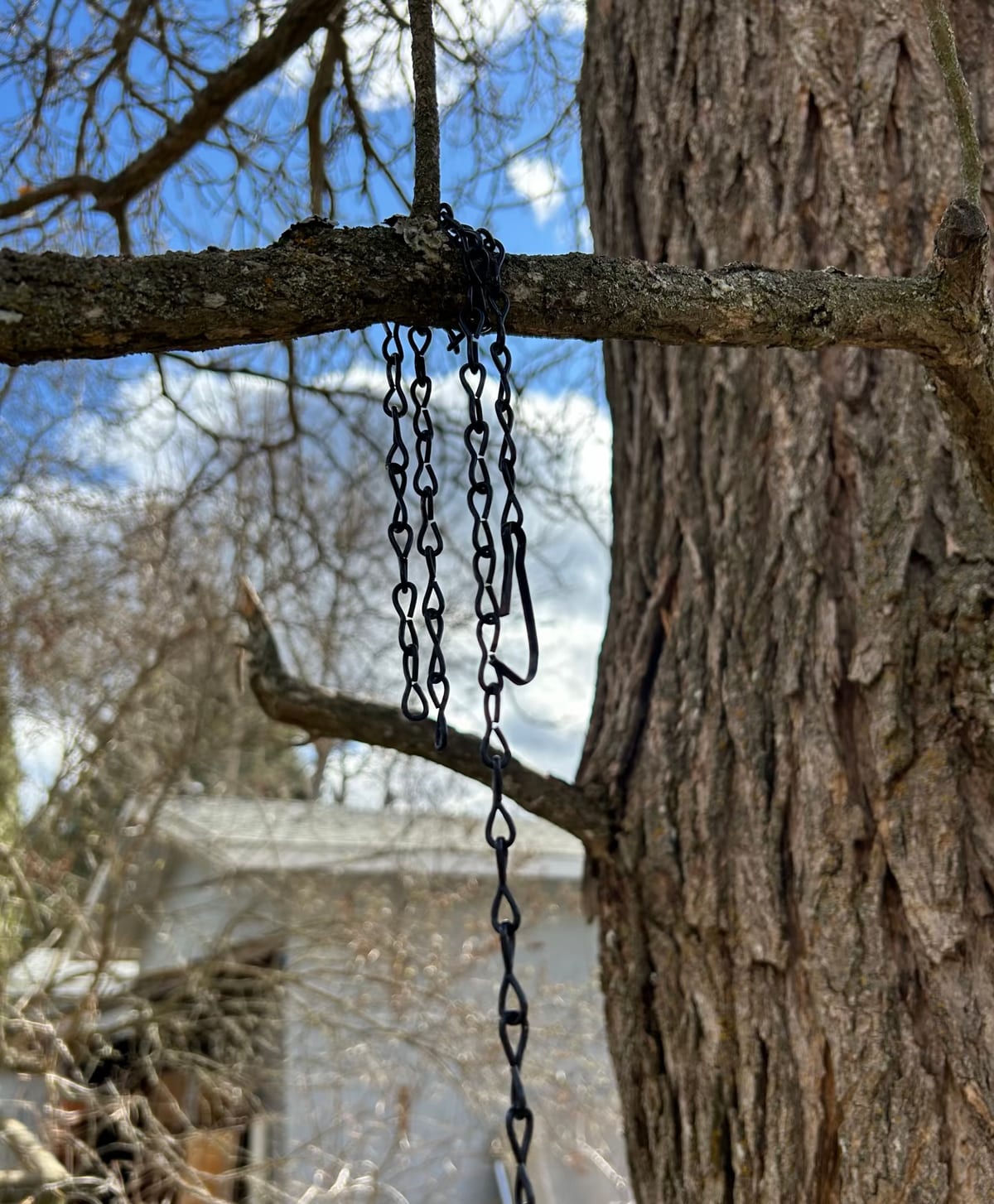
When to stop feeding birds: every deadline on one page
Four different things force a takedown and they run on four different clocks. Only one of them is a date.
| What forces it | When | Firmness | Source |
|---|---|---|---|
| Bears, in bear country | Down by April 1 statewide in New Hampshire, mid-March south of the White Mountains | A state agency asking the public to act, not a national law | NH Fish and Game |
| Bears, general window | Roughly mid-March to mid-November | Descriptive of bear country generally | National Wildlife Federation |
| Deliberately feeding bears | Never, at any time of year | Stated without qualification | NH Fish and Game |
| Plain suet | When it gets warm, by temperature rather than by date | Practical, the fat goes rancid | Temperature |
| Nectar | On its own schedule, tightening as it heats | Practical, and the cleaning matters more than the date | Temperature |
| Summer, outside bear country | No deadline | Genuinely contested, and yours to decide | Two defensible positions |
| Avian influenza, no poultry kept | No deadline | Removal generally not necessary | Virginia DWR |
| Avian influenza, poultry kept | Take feeders down | Stated as the exception | K-State Extension |
The row people look for is a national date, and it does not exist. The rows that behave like rules are local, and the only absolute in the whole table is the one about feeding bears on purpose.
Summer: two positions, both defensible
Outside bear country the summer question is genuinely contested, and the two sides are arguing about different things.
The case for stopping in summer
Humane World for Animals puts it directly: Most birds don't need your help in the summer. When they are nesting and rearing their young, many birds focus on eating insects, so feeding is less necessary. And a second argument that is about the birds' development rather than their nutrition: It is also important for young birds to learn how to find naturally occurring foods, so take a break from filling feeders in summer.
The case for continuing
The National Wildlife Federation's summer arguments are about what you get to see, and they are honest about that: birds that visit in summer include species not present during winter, the birds are wearing colorful breeding plumage instead of drab winter feathers, and once nesting is over, adults will introduce their young to your bird feeders.
The US Fish and Wildlife Service sits closer to that second position, opening its bird feeding guidance with the observation that Feeding birds in the spring and summer months can bring particular excitement. Many new species may frequent your feeder, and then spending the rest of the page on how to do it well.
Read carefully, these are not really in conflict. Humane World is answering "do the birds need this," and the answer is mostly no. The National Wildlife Federation is answering "is it worth doing anyway," and the answer is that summer is when the feeder is most interesting to watch. Both can be true, which means the summer decision is yours rather than the birds'.
Some foods carry their own deadline
Two things on the menu expire regardless of what you decide about the season.
When to take suet down
Cornell is blunt: Suet can quickly become rancid in warm weather, but some commercial suet cakes and doughs can be used year-round. Project FeederWatch repeats the caution for shoppers: Be careful if you offer suet in hot weather; it may become rancid if it has not been specially processed. Plain suet from a meat counter comes down when the weather warms. A processed cake may not have to. Suet earns its place in cold weather specifically, which is the season it was always for.
When nectar has to go
The US Fish and Wildlife Service is the most severe of any source here, and the wording deserves quoting in full: Remember, sugar water will ferment when left in the hot sun, turning nectar deadly. Do not put out a nectar feeder if you are not willing to clean it at least weekly, preferably twice a week.
That is a conditional worth taking literally. A hummingbird feeder is not a decoration you hang and forget. If the twice-weekly cleaning is not going to happen, the honest move is not to put it out at all. The same standard applies to standing water, which birds drink from and sit in.
Nectar also runs on its own calendar at the other end of the year, and the autumn question has a different answer from the one most people expect: nothing about migration requires you to take a hummingbird feeder down.
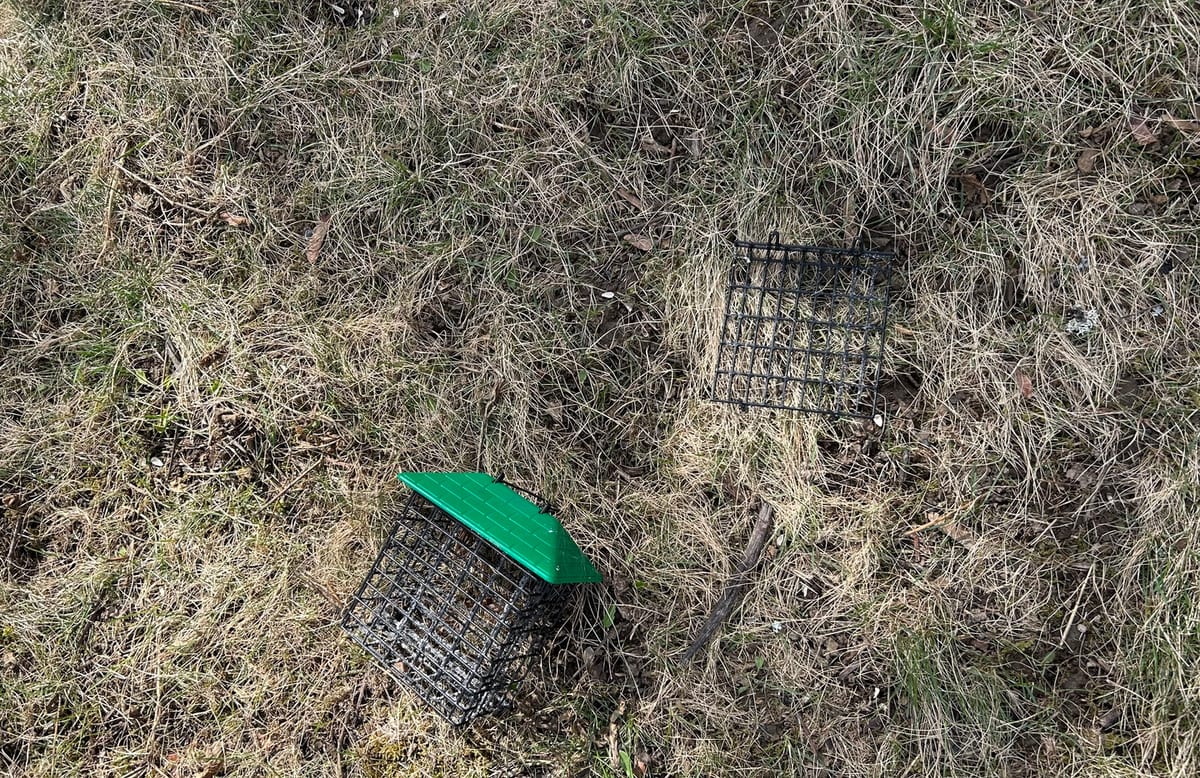
Do birds depend on feeders? The reason that does not hold
The most common reason people keep a feeder up when they should not is guilt, and the research does not support it.
Cornell, citing studies: studies show that even birds with full access to feeders consume three-quarters of their diet elsewhere, and that when feeder birds are deprived of supplemental foods, they quickly revert to an all-natural diet.
Three-quarters of the diet comes from somewhere else even when the feeder is full. Taking it down in April does not remove a food supply that birds have organized their lives around, because they never did. Cornell's own advice is to taper off if convenient and otherwise not to worry, since natural food vanishes under snow all winter and birds are built to handle exactly that.
The same fact is worth remembering in the other direction. It is why a dirty feeder is worse than no feeder: the upside of keeping it running is smaller than most people assume, and the downside of running it badly is not.
That pattern holds at the scale of whole populations too, where the species using feeders most have trended better rather than worse and disease is the one documented exception.
The exceptions almost everyone agrees on
Two birds get named repeatedly as summer exceptions.
Hummingbirds, because nectar is fueling an extreme metabolism rather than supplementing a diet. And goldfinches, which nest later than most species, which is why nyjer is worth offering into late summer until thistle seed becomes available naturally.
The nectar exception comes with the cleaning obligation above attached to it, not separate from it.
The deadline is only half the suet question. What the block is made of, and the second reason it comes down in heat, are in suet for birds.
Questions people ask
Should I stop feeding birds because of avian flu? Not if the only birds involved are the ones at your feeder. Virginia's Department of Wildlife Resources says removal is generally not necessary, because transmission among songbirds is much lower than in waterfowl and raptors. The exception is a household that also keeps poultry, and a local advisory from your own state agency outranks both. The full reasoning, and what changes if you find a sick or dead bird, is in what to do about a dead or sick bird at the feeder.
When should I take my bird feeders down for bears? Follow your own state wildlife agency. New Hampshire asks for feeders down no later than April 1 statewide and mid-March in the south of the state; the National Wildlife Federation describes roughly mid-March to mid-November as the window in bear country.
Is it illegal to have a bird feeder up during bear season? Generally these are agency recommendations rather than national law, though local ordinances exist in some areas. What agencies state without qualification is that you should never deliberately feed bears.
Should I stop feeding birds in summer? The birds do not need it, per Humane World for Animals, since nesting birds concentrate on insects and young birds benefit from learning to forage. Continuing is defensible for other reasons, since summer brings species and plumage that winter does not. Outside bear country the choice is yours rather than an obligation.
When should I take suet down? When it gets warm, if it is plain suet, because it goes rancid quickly. Some processed suet cakes are formulated for year-round use, so check the product.
Will birds starve if I stop feeding them? No. Research cited by Cornell found birds take three-quarters of their diet elsewhere even with full feeder access, and revert to natural food quickly when feeding stops.
When to stop feeding birds: the short version
Bears settle it in spring wherever they live, and the reason is that a feeder is often the first human food a bear ever tastes, which begins a sequence that usually ends with the bear dead. Suet and nectar have deadlines set by temperature rather than season, and unwashed nectar in hot sun turns dangerous. Summer feeding is a genuine judgment call outside bear country, since the birds do not need it and you may still want it.
The one reason to dismiss is the fear of starving them. They were never relying on you for more than a quarter of anything. When to stop feeding birds is a question about bears, ordinances and your own schedule, and never about starving them.
The photographs in this article were taken by our contributor Kevin Hu and are used with permission. More on where our photographs come from.