
When to Take Down Hummingbird Feeders (and Why There Is No Deadline)
When to take down hummingbird feeders: Audubon says two weeks after the last bird you see. Leaving them up does not delay migration, whatever you have heard.
The short answer to when to take down hummingbird feeders is that nothing forces you to. Leaving a feeder up does not hold birds back from migrating, and every authority that publishes on this says the opposite of the worry that drives the question.
What actually ends the season is your willingness to keep cleaning it.
Does leaving hummingbird feeders up delay migration?
No, and the Smithsonian's National Zoo names the belief directly: It's a myth that leaving hummingbird feeders up too late in the fall will prevent the birds from migrating. Hummingbirds have an internal clock regulated by the changing day length, which lets them know when it's time to go.
Audubon gives the same mechanism in more detail: No, hummingbirds are migratory species and are genetically programmed to head south in the fall. The trigger is not the buffet. It's not a lack of nectar source or colder weather that makes them leave, because they know it's time based on changes in the length of the day and the angle of the sun.
Day length is not something a feeder can alter. A hummingbird with unlimited sugar water in front of it reads the same calendar as one without.
So when should you take down hummingbird feeders?
Audubon gives a number, and it is the number the whole internet has copied: In the fall, keep your feeders up for two weeks after you see the last bird using it.
That is a rule tied to your own yard rather than a date on a calendar, which makes it more useful than it first looks. It also has a spring counterpart built on the same logic, using public data instead of guesswork: Check eBird to find out when the first hummingbird sightings occur each spring, and hang your feeders up a couple of weeks before that.
The same tool answers the autumn question. Local eBird records show when sightings in your county thin out and stop, which is a far better signal than a national average.
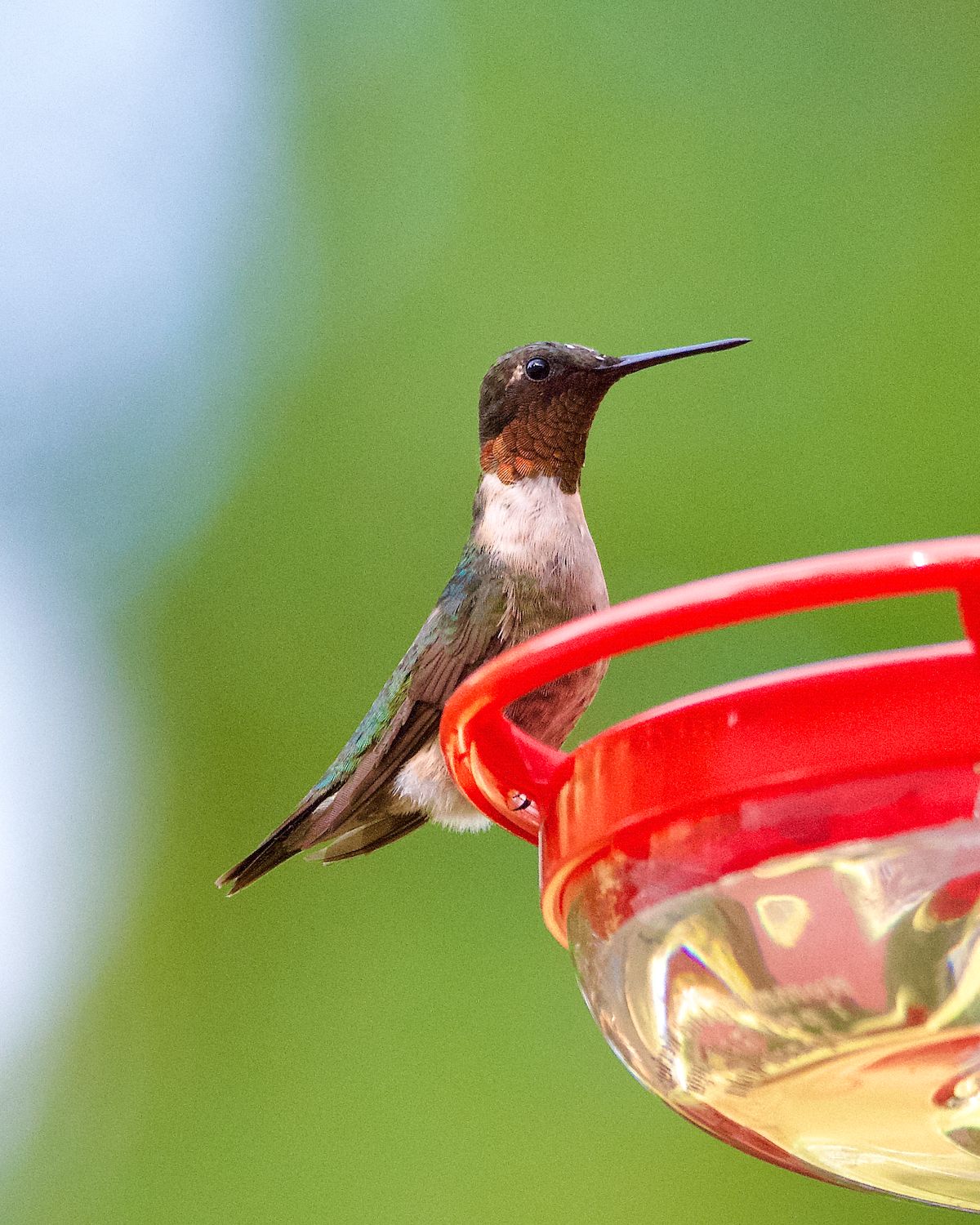
What do the regional calendars say?
The Smithsonian publishes approximate bands rather than one national date, since the country spans several months of difference.
| Region | Feeders can be up | Rough window |
|---|---|---|
| Gulf Coast and other southern parts of the U.S. | mid-February to early November | about 8.5 months |
| Middle latitudes | early-to-mid April through late October | about 6.5 months |
| Farther north | early May to late September | about 5 months |
| Areas with hummingbirds year round | no need to take feeders down | all year |
Those are quoted from the Smithsonian's guidance, which states that Along the Gulf Coast and other southern parts of the U.S., feeders can be set up from mid-February to early November. In the middle latitudes, they can be placed from early-to-mid April through late October. Farther north, they can be set up from early May to late September.
The guidance attaches a qualifier: Keeping clean feeders up longer than these guidelines suggest does no harm and can help any stragglers.
So the bands map when hummingbirds are usually around. Treating them as removal dates reads more into them than the Smithsonian puts there.
Why does Audubon give three different endpoints?
Audubon publishes three separate answers on three separate pages, and only the shortest one gets quoted elsewhere.
| Audubon page | Where it says to stop |
|---|---|
| How to Create a Hummingbird-Friendly Yard | two weeks after the last bird uses it |
| Hummingbird Feeding FAQs | after they disappear, since late arrivals turn up into early winter |
| Where Do Hummingbirds Go in the Winter? | through the fall and even into the winter |
The FAQ says You can leave your feeders out for as long as you have hummingbirds around, and then goes further: You can even continue to provide the feeder after your hummingbirds disappear, with late migrants and out-of-range birds showing up into early winter.
The winter feature goes furthest. Quoting hummingbird researcher Sheri Williamson, Audubon reports that Hummingbird feeders can provide an oasis for a vagrant individual, says Williamson. She recommends leaving out your feeder through the fall and even into the winter.
Three statements, one organization, no contradiction between them. Two weeks is the shortest of the three and the only one most articles repeat, which turns a floor into a ceiling. Read together, they say the two-week mark is when you may stop, not when you should.
What if a hummingbird turns up in November?
Then you may be looking at a bird that belongs there, or one that has wandered, and neither is a reason to pull the feeder.
Audubon lists the places where winter hummingbirds are normal: Several species of hummingbirds regularly overwinter along the Gulf Coast, southern Arizona, and south Florida. Some species are not migrants at all in parts of their range, and Anna's Hummingbirds are resident from northwestern Baja California along the Pacific coast to British Columbia.
The pattern is also shifting. Audubon reports that Recent research suggests that hummingbirds are spending the winter in the United States in greater numbers than in the past, attributing it to warming temperatures moving some species' ranges northward.
A November hummingbird outside those regions is a wanderer, and Williamson's oasis point applies exactly to that bird.
Hummingbird feeder freezing weather: does the nectar need changing?
Two facts here, and one honest gap.
The feeder must not freeze. Audubon is direct about the requirement: If you live in an area where the night-time temperatures dip below freezing regularly you will need to make sure your nectar feeder does not freeze.
Sugar water is more tolerant than plain water. A light frost may not be a problem at all, since In areas where the nighttime temperatures only dip slightly below freezing your hummingbird nectar may not freeze as the sugar solution has a lower freezing point than plain water.
And a worry that turns out to be unfounded. Audubon notes that, contrary to popular belief, drinking cold nectar does not appear to "cold stun" the birds and is not a concern.
The gap: Audubon states the requirement without prescribing a method for meeting it, and we have not found guidance from a national authority on how to keep a nectar feeder liquid overnight. Plenty of sites recommend specific tricks. None that we could trace lead back to Audubon, the Smithsonian, or Cornell, so this article does not repeat them as though they did.
Does the sugar water need to be boiled?
If the feeder has never had a visitor at all, the question ahead of this one is where it is hanging.
The three sources we use give three different instructions on heat, and they agree on everything that carries risk: the 1:4 ratio, refined white sugar only, no honey, and no dye. Because the boiling step is the only one they split on, it is set out separately, with each source quoted, in the hummingbird nectar recipe.
What none of them treats as optional is how often the feeder is emptied and washed.
What actually decides whether you keep it out?
The cleaning schedule, and it tightens as the feeder sits longer.
Audubon scales it by temperature: In hot weather, the feeder should be emptied and cleaned every day or every other day. In temperate weather, every three days. In cooler weather, twice per week is enough. There is also a rule that overrides the schedule: If your hummingbirds empty the feeder with greater frequency, clean it every time it's empty.
In autumn that obligation gets easier to let slide. Visits drop off, the nectar goes untouched, and the feeder starts to look like it can wait. Audubon closes that door: Follow the guidelines for keeping the feeders clean, even if the nectar goes untouched, and Always discard any unused nectar in the feeder when you take it down for cleaning.
An untouched feeder is still a warm sugar solution, which is a growth medium whether or not a bird drinks from it. It is also what draws insects, and a feeder that has started to drip is the version ants and wasps find first. This is the same standard the US Fish and Wildlife Service applies as a condition on putting a nectar feeder out at all, and it sits alongside the general cleaning routine for the rest of your feeders, which runs on a much slower clock.
So the real decision is not a date. If you will keep washing it twice a week through October and November, leave it up and you may help a straggler. If you will not, take it down while it is still clean.
One placement note while it is out: the Smithsonian advises to Place your feeder in the shade away from windows and areas with a lot of activity. Shade slows spoilage, and the window half of that advice matters more than it sounds, since glass is the largest single hazard a feeder creates.
One symptom is worth naming because it answers the schedule question for you. Nectar that has gone cloudy before the next scheduled change is evidence that the interval was too long for the weather it was sitting in.
Questions people ask
When should I take my hummingbird feeder down? Audubon says to keep it up for two weeks after you see the last bird using it. Its other guidance goes further, saying you can continue after they disappear because late migrants turn up into early winter.
Will leaving my hummingbird feeder up keep them from migrating? No. The Smithsonian calls this a myth and states that hummingbirds have an internal clock regulated by changing day length. Audubon says migration is not triggered by nectar supply or cold weather.
How long should I leave hummingbird feeders up in the fall? At least two weeks past the last sighting, and longer does no harm. The Smithsonian states that keeping clean feeders up beyond its regional guidelines helps any stragglers.
When do hummingbirds leave my area? It depends on latitude. Southern states run to early November, the middle latitudes to late October, and northern areas to late September, per the Smithsonian. Local eBird records give a better answer than any national date.
Should I feed hummingbirds in winter? In parts of the Gulf Coast, southern Arizona, and south Florida, hummingbirds regularly overwinter and there is no need to stop. Elsewhere, a winter bird is usually a wanderer, and one researcher quoted by Audubon recommends leaving a feeder out through the fall and into winter for exactly that situation.
Does cold nectar hurt hummingbirds? Audubon says that, contrary to popular belief, drinking cold nectar does not appear to cold stun birds and is not a concern. The feeder freezing solid is the actual problem.
Do I have to boil hummingbird nectar? Audubon's recipe says to bring it to a boil and let it cool. The Smithsonian's says to mix until the sugar dissolves, with no heating. Both agree on 1:4 refined white sugar and no red dye.
When to take down hummingbird feeders: the short version
There is no date. Migration runs on day length, so a full feeder changes nothing about when the birds go, and every source here says leaving it up longer either does no harm or actively helps the late ones.
What ends the season is the washing. Twice a week in cool weather, every time it empties if they are draining it, and no skipping just because the nectar looks untouched.
So the practical move is not to mark a day on the calendar. Open eBird, find the last hummingbird records for your county, and commit to two more cleanings after that. If that commitment sounds like more than you want in November, the honest thing is to bring the feeder in now, while it is still clean, and hang it again in spring a couple of weeks before the first sightings arrive. That is when to take down hummingbird feeders honestly: on your schedule, not theirs.
The photograph in this article is a stock image, credited above. The rest of the site's photographs come from two named contributors. More on where our photographs come from.