
You Found a Dead or Sick Bird at Your Feeder. What to Do Now
Found a dead bird at your feeder? Take the feeders down for two weeks, handle the bird with gloves, and wash your hands. Why cleaning harder is not enough.
If you have found a dead bird at your feeder, or a sick bird at the feeder that lets you walk right up to it, three things need doing today.
Take the feeders down. Not clean them, take them down, for about two weeks. Handle the bird with gloves or a bag over your hand. Wash your hands afterwards, even if you wore gloves and even if you touched nothing but the feeder.
The reasoning behind each of those is below, including one part that most bird-feeding advice leaves out entirely: this is not only a bird health problem.
Sick bird at the feeder: what to do first
Project FeederWatch describes what salmonellosis looks like: Sick birds may appear thin or fat and fluffed up and may have swollen eyelids.
The behavioral sign is often clearer than the physical one. A wild bird that does not fly off when you approach, that sits fluffed at a feeder for long stretches, or that seems unbothered by your presence, is a bird that has lost the energy or alertness to be afraid of you.
Other diseases at feeders present differently. FeederWatch describes House Finch eye disease as red, swollen, runny, or crusty eyes, progressing in severe cases until eyes become swollen shut and the bird becomes blind. Avian pox produces wart-like growths appear on the featherless areas.
You do not need to identify which disease it is. The response is the same.
One thing that looks alarming and is usually none of the above: a bird with a completely bare head in late summer. That is most often a molt rather than an illness, and the skin underneath is what tells the two apart.
Why am I finding dead birds by my feeder, and why take it down?
Because the feeder is the meeting point, and cleaning does not disperse the crowd.
Salmonellosis spreads, in FeederWatch's words, primarily transmitted by fecal contamination of food and water by sick birds, though it also can be transmitted by bird-to-bird contact. A feeder concentrates many birds onto a few shared surfaces, repeatedly, which is precisely the condition that transmission needs.
So the instruction is to break up the gathering: Remove the feeders the sick bird is using for a couple of weeks.
Two weeks with the feeders down does something scrubbing cannot. The birds spread back out across natural food sources, and the chain of contact breaks.
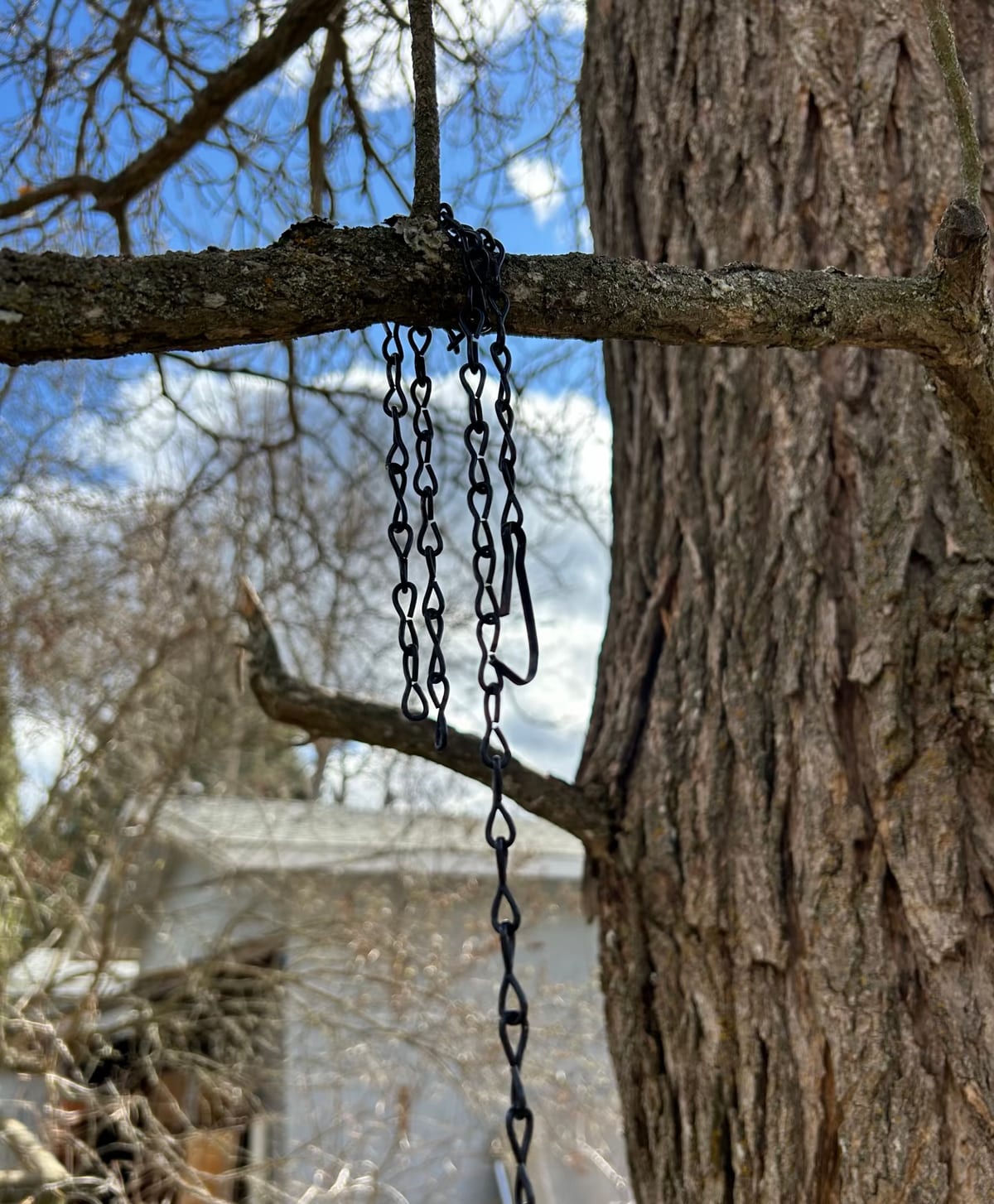
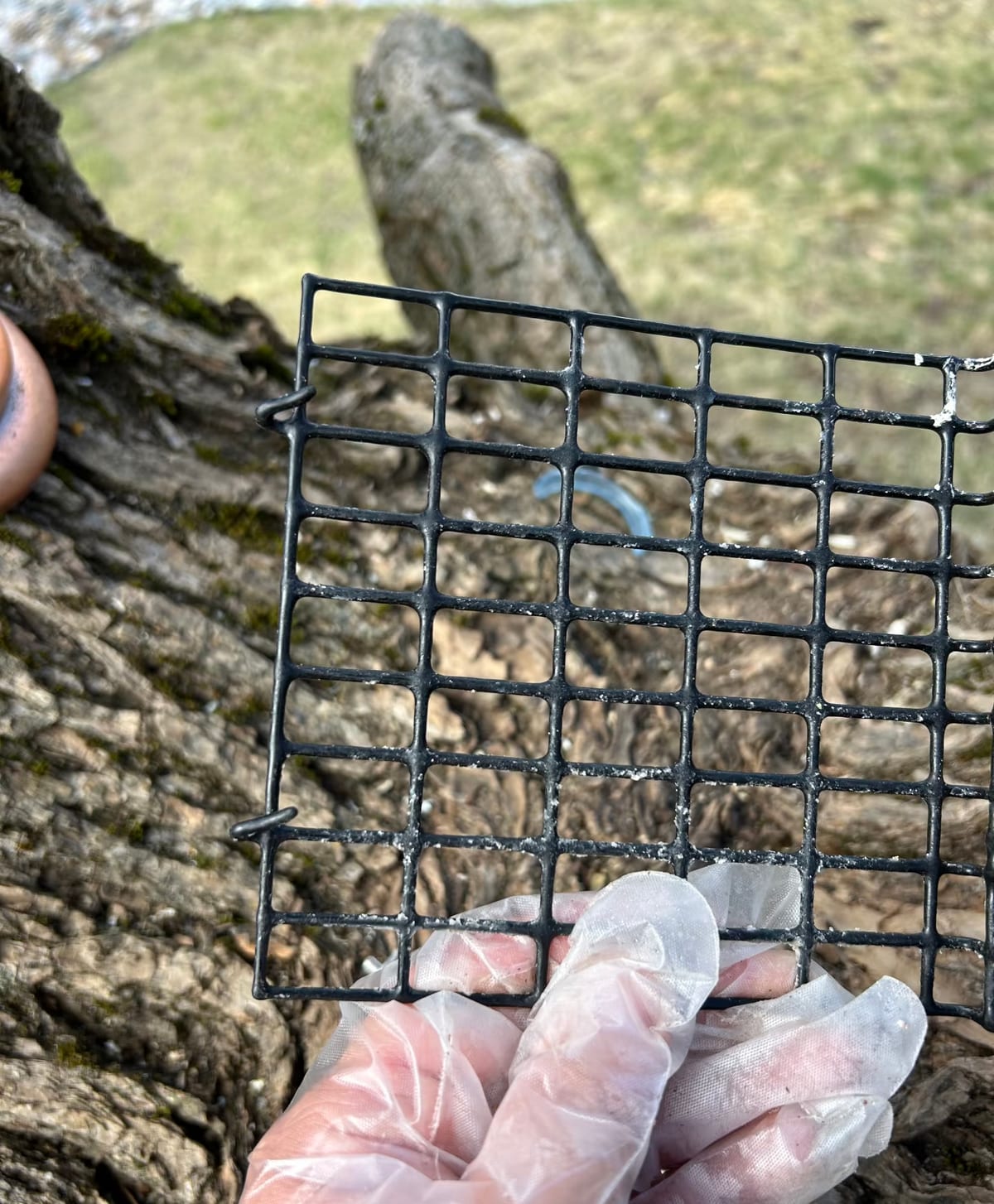
While they are down, clean them properly. Scrubbing before disinfecting is a sequence rather than a choice, because bleach cannot reach bacteria sheltered inside debris. Clear the ground underneath as well, since droppings and hulls sit where ground-feeding birds forage. Standing water counts too, so a bird bath is on the same schedule.
Can you catch anything from a bird feeder?
That risk gets left out of most advice, and it is not hypothetical.
In 2021, an outbreak of Salmonella Typhimurium in wild songbirds crossed into people. The investigation began when, as the CDC's Emerging Infectious Diseases journal reports, In February 2021, public health officials in Oregon and Washington, USA, isolated a strain of Salmonella enterica serovar Typhimurium from humans and a wild songbird. The bird was a pine siskin (Spinus pinus), a type of finch, collected in Oregon in December 2020.
The scale, per the same paper: Investigation by public health partners ultimately identified 30 illnesses in 12 states linked to an epidemic of Salmonella Typhimurium in songbirds. CDC's outbreak notice at the time recorded 29 illnesses and 14 hospitalizations across those 12 states, with no deaths. The two counts differ because the notice was published during the investigation and the journal paper reports the final tally.
The paper's conclusion names the mechanism plainly: This outbreak highlights a One Health issue where actions like regular cleaning of birdfeeders might reduce the health risk to wildlife, companion animals, and humans.
And the detail that makes hand washing non-negotiable rather than fussy: Birds can carry germs like Salmonella while looking healthy and clean.
A feeder full of birds that all look fine is not evidence of anything.
What CDC asks people to do, in its own words:
- Wash your hands with soap and water after touching your bird feeder.
- Keep pets away from bird feeders and bird baths and the areas under them.
- Clean your bird feeder and bird bath at least monthly.
The pet instruction is the one people are most surprised by. A dog that noses around under a feeder, or a cat that catches a sick bird, is a route into the house.
What about bird flu?
For most households the answer is that the feeders stay up, and the reason is a distinction people rarely hear.
Songbirds are not the birds this disease is worst in. K-State Extension puts them at the bottom of the list: Wild Songbirds are one of the least affected groups, behind waterfowl, shorebirds, raptors and scavengers.
Virginia's Department of Wildlife Resources says the same thing about transmission and draws the conclusion: The rate of transmission of avian influenza in songbirds is typically much lower than in some other types of birds, and Generally, removal of bird feeders is not necessary unless other factors are present.
The exception is poultry, and it is the whole reason the advice is ever different. K-State: Currently, it is not necessary to remove bird feeders from your yard unless you have poultry flocks. The risk being managed runs from wild birds to a vulnerable flock, not from one songbird to another. If you keep chickens, the feeder is a reason for wild birds to gather near them.
Two things change the answer even without poultry. Virginia notes that the agency at times may issue advice for temporary removal of feeders in select locations, so a local advisory outranks anything on this page. And the presence of sick or dead birds moves you into the response this article already describes: If sick or dead birds of any species are witnessed around a bird feeder, it should be removed for several weeks and thoroughly disinfected.
That last instruction is the same action as the salmonellosis response above, which is convenient: you do not need to identify the disease to respond correctly.
Do not handle sick or dead wild birds. Virginia states it plainly, and its reporting thresholds are worth knowing: contact the state for clusters, including Ten or more dead wild birds of any other species in the same area within five days.
This is guidance that moves. Outbreak advice is issued locally and updated, so check your own state wildlife agency before acting on any national summary, including this one.
What do you do with a dead bird at a feeder?
Do not pick it up bare-handed. CDC's instruction is to wear gloves or place a plastic bag over your hand to pick it up.
Check before you bin it. Some agencies want to know: If you find a dead bird, check with your state wildlife agency for information about reporting dead birds in your area. Several states collect specimens for disease testing, and a cluster of dead birds in one yard is exactly the signal those programs exist to catch.
Then dispose of it as instructed. Place the bird in a plastic bag, tie the bag up, and throw it away, following your local officials' instructions.
And wash your hands, gloves or no gloves.
Can you help a sick bird yourself?
No, and this one is a legal matter rather than a judgment call. FeederWatch: Only veterinarians or federally licensed wildlife rehabilitators can legally treat wild birds.
Disease at the feeder is also the one part of this hobby with real evidence of harm behind it, which is why the cleaning matters more than any other decision you make: what the population data says about feeding birds.
If a bird is alive and clearly in trouble, a licensed wildlife rehabilitator is who to call. Attempting home treatment is both against the law and, for a bird carrying something transmissible, a way of bringing it closer to you.
One case looks similar and is handled differently. A bird lying under a window has usually collided with the glass rather than caught anything, it is often unconscious instead of dead, and the response starts with checking its legs for rigor before you assume the worst. A young bird on the ground next to a nest is a nestling or fledgling decision, not a feeder-disease one.
The hardest version of this is a bird that is dying and cannot be helped. There is no good answer to that beyond not making it worse, and the useful thing you can do for the rest of the flock is the two-week takedown.
The whole response on one page
You do not need to identify the disease, so the table is organized by what you found rather than by what it was.
| What you found | Do this first | Then | Do not |
|---|---|---|---|
| A bird sitting fluffed, not flying off | Take the feeders down, all of them | Watch the yard for a few days | Do not just clean them and rehang |
| Red, swollen, runny or crusty eyes | Same. Take them down | Same | Do not try to catch or treat it |
| A dead bird under the feeder | Gloves, or a bag over your hand | Check your state wildlife agency, then bag it and bin it as instructed | Do not pick it up bare-handed |
| Several dead birds in one yard | All of the above | Report it. This is the signal state testing programs exist to catch | Do not assume it is a coincidence |
| A young bird on the ground by a nest | Decide nestling or fledgling first | Put a nestling back; leave a fledgling | Do not treat it as feeder disease |
| Nothing wrong, routine week | Clean on schedule anyway | Every week or two | Do not wait for symptoms |
Every feeder row ends the same way: wash your hands, gloves or no gloves. The rows differ in urgency and not in the sequence. The young-bird row is the exception: it is a different problem, not a different cleaning step.
When can the feeders go back up?
After about two weeks, cleaned and completely dry.
Watch what happens over the following days. If sick birds appear again, take them down again. A yard that keeps producing sick birds is telling you something about crowding, and the answer is fewer birds per feeder: spread food across several feeders rather than one, and keep the ground underneath clear. If the birds do not return at all after the two weeks, that has its own set of causes.
The baseline standard does not wait for symptoms. FeederWatch's standing instruction is to Regularly clean your feeders even when there are no signs of disease, and CDC's floor is monthly for feeders and baths.
Questions people ask
I found a dead bird under my feeder. What should I do first? Take the feeders down for about two weeks, handle the bird with gloves or a bag over your hand, bag and dispose of it per your local guidance, and wash your hands. Check whether your state wildlife agency wants dead birds reported.
How long to take bird feeders down after disease? About two weeks, per Project FeederWatch. The point is to disperse the birds and break the chain of contact, which cleaning alone does not do.
Can salmonella from a bird feeder infect humans? It has happened. A 2021 Salmonella Typhimurium epidemic in songbirds was linked to 30 human illnesses across 12 states, and CDC notes that birds can carry Salmonella while looking perfectly healthy. Washing hands after touching a feeder is the basic precaution.
Can my dog or cat catch something from the feeder area? CDC advises keeping pets away from feeders, baths, and the ground beneath them. Pets are a route from the feeder into the house.
What does a sick bird look like? Thin or fluffed up, sometimes with swollen eyelids, and often unwilling or unable to fly away from you. Eye disease shows as red, swollen, runny, or crusty eyes.
Should I try to catch and treat it? No. Only veterinarians and federally licensed wildlife rehabilitators may legally treat wild birds. Call a rehabilitator if the bird is alive.
A dead bird at your feeder: the short version
Take the feeders down for two weeks rather than cleaning them harder, because dispersing the birds is what breaks transmission and scrubbing does not. Handle the bird with gloves or a bag, check whether your state wants it reported, and wash your hands regardless. Keep pets away from the area. And treat the human side as real: a 2021 songbird Salmonella epidemic was traced to 30 illnesses in 12 states, and infected birds can look completely healthy.
None of this means feeding birds is dangerous. It means the feeder is a shared surface, and shared surfaces get cleaned. A dead bird at feeder level is a signal about the surface, not a verdict on the hobby.
The photographs in this article were taken by our contributor Kevin Hu and are used with permission. More on where our photographs come from.