
Is Feeding Birds Bad for Them? What the Population Data Shows
Is feeding birds bad for them? Species that use feeders most are doing better in the population data. The research, and the one harm you control.
Whether feeding birds is bad for them has an answer at the scale that matters, and it is more reassuring than most articles on the subject suggest. Across decades of data, the species that use feeders the most have been doing better over time, not worse.
The exception is disease. It is the one documented harm, and it is also the one thing on the list that depends entirely on how you keep the feeder.
Is feeding birds bad for them?
Not according to the only study that has looked at it across enough species and enough years to say.
Project FeederWatch describes the gap it set out to fill: despite 50 million people in the US offering billions of pounds of seeds to birds every year, we know very little about the consequences of this hobby on native species in North America.
The test they chose is a fair one: If supplemental feeding is ecologically detrimental, then we would expect to see long-term population declines in the species that consume the most supplemental food.
That is a prediction that could have failed. It did not.
What did the study actually measure?
Two long-running datasets, matched against each other.
FeederWatch describes the method: We looked at 30 years of FeederWatch data collected by thousands of project participants to select 135 species using feeders occasionally to regularly. Then we looked at the population trends for those species using 50 years of Christmas Bird Count data.
So one dataset establishes which birds actually use feeders and how heavily, and a separate, older dataset says what happened to their numbers. The two were collected for different reasons by different people, which is what makes the comparison worth something.
A note on what this is. The summary comes from a presentation by FeederWatch project leader Emma Greig at the North American Ornithological Conference in 2016, covering research by Greig and Cornell Lab citizen science director David Bonter. It is a research summary published by the institution that holds the data, not a peer-reviewed paper, and it is worth reading with that in mind.
What did they find?
The finding runs against the direction most people expect: Overall, species that utilize bird feeders the most were doing better over time, rather than worse, and the few species showing declines include non-native species (House Sparrow, European Starling) or species suffering from novel diseases (House Finch).
Look at which species are on the declining list, because the composition is the interesting part. House Sparrows and European Starlings are not native to North America. Their decline is not a conservation problem in the way a native songbird's would be, and nobody is arguing that feeders should be defended on their behalf.
That leaves House Finch, and the reason given is disease. Which is the whole of the case against feeding, and it comes up next.
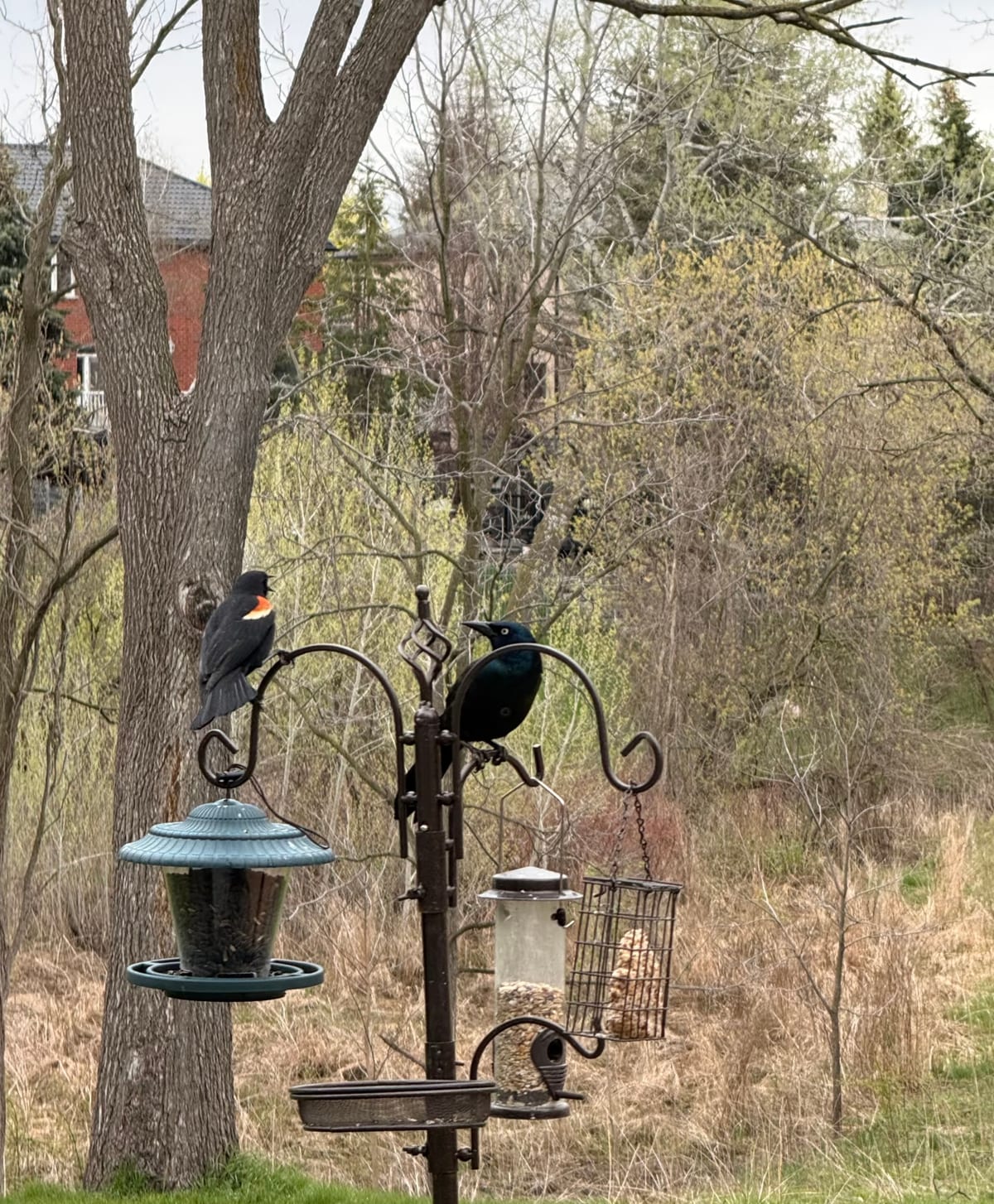
Which birds does this not help?
The ones in the most trouble, and FeederWatch says so directly: The species most in trouble, such as seabirds and shorebirds, don't come to feeders and are declining because of other threats.
That sets the ceiling on what a feeder is. A backyard station reaches a particular set of common, adaptable species. It does nothing for the birds whose populations are collapsing, and no amount of sunflower seed changes that.
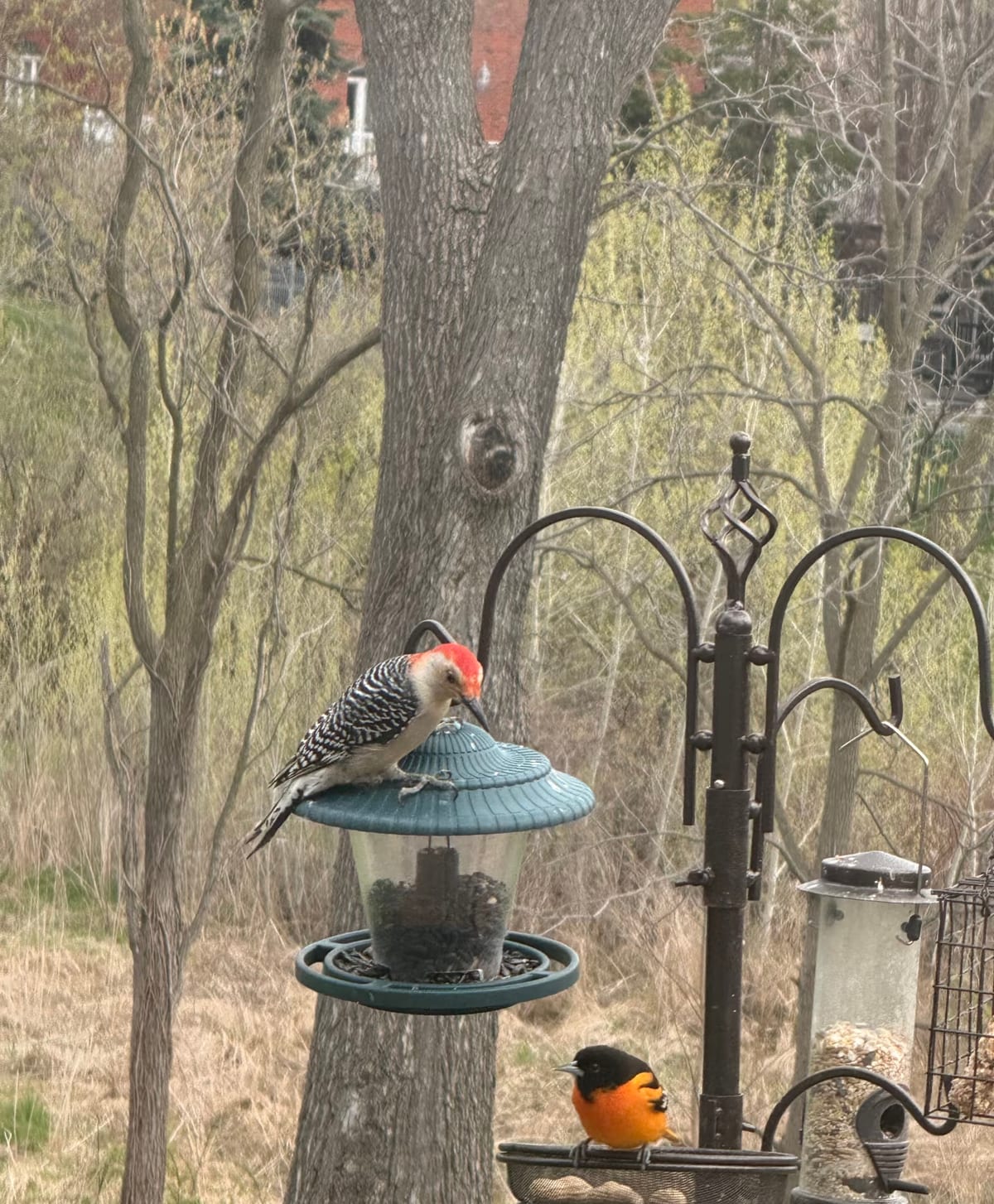
FeederWatch offers a different kind of value instead: Feeding birds may not help the hardest-hit species, but it may inspire people to support conservation.
What is the one real harm?
Disease, and there is a documented case study rather than a hypothetical.
House Finch eye disease at bird feeders appeared suddenly and spread across a continent. FeederWatch dates it: Since January 1994, when House Finches with red, swollen eyes were first observed at feeders in the Washington, D.C. area, including parts of Maryland and Virginia, House Finch disease has spread rapidly through the eastern House Finch population.
The pathogen had not been in songbirds before. It is caused by a unique strain of Mycoplasma gallisepticum, a parasitic bacterium previously known to infect only poultry, and the same page notes it had not been reported in songbirds prior to this outbreak.
For the birds that get it, the outcome is often fatal, though indirectly: While some infected birds recover, many die from starvation, exposure, or predation. A bird that cannot see does not last long.
And it did not stay in one species. FeederWatch reports that The disease has affected several other wild bird species, including American Goldfinch, Evening Grosbeak, and Purple Finch.
Did feeders cause that outbreak?
That is the question everyone jumps to, and the honest answer is that Cornell does not say so.
The House Finch page describes the origin as unsettled: Researchers at various institutions are currently trying to learn more about the transmission, genetics, and development of this disease. No claim is made there that feeders started it.
There is also a reason to be careful about the phrase "first observed at feeders." Feeders are where people look at birds. A disease that produces swollen eyes was always going to be noticed first in the one place where humans watch finches from ten feet away through a window. Where something is spotted is not the same as where it began.
What can be said, because FeederWatch says it, is that feeders are a transmission surface for feeder-borne disease in general. Describing a different illness, the same page notes that avian pox is transmitted by biting insects, by direct contact with infected birds or contaminated surfaces (e.g. feeders), or by ingestion of contaminated food or water. And for salmonellosis, FeederWatch states that it is primarily transmitted by fecal contamination of food and water by sick birds, though it also can be transmitted by bird-to-bird contact.
Contaminated food and water is a description of a neglected feeder. That is the link that holds up, and it points at maintenance instead of at the hobby.
What about the harms that are not disease?
Each one is real, each has a fix, and each has its own article on this site, so here they are in one line apiece.
| Concern | Population-scale evidence? | In your control? | Covered in |
|---|---|---|---|
| Disease transmission | Yes, House Finch is the documented case | Almost entirely | Cleaning, sick and dead birds |
| Window collisions | Yes, at continental scale | Yes, by placement and glass treatment | Window strikes |
| Cats and predators | Yes, independent of feeders | Partly, by placement | Cats and feeders |
| Rodents | Local rather than population-scale | Yes, by cleanup and storage | Rats under the feeder |
| Dependency | No, the evidence points the other way | Not an issue | When to stop feeding |
The dependency row is the one people worry about most and the one with the least behind it. Birds with a full feeder in front of them still take about three quarters of their diet elsewhere, which is covered in the article on stopping.
What do the researchers say they still do not know?
Enough that overconfidence in either direction is unearned. FeederWatch lists its own open questions: We still have a lot to learn about the impacts of feeding birds, such as possible indirect effects on migratory species, or possible effects on generalist predators such as crows that may subsequently impact populations of non-feeder birds or small animals.
That second one deserves attention. A feeder supports the birds at it, and it may also support the crows and jays that eat other birds' eggs. Whether that nets out is not known. Anyone telling you feeding is definitively harmless is going further than the people who did the research.
So what does this mean for your yard?
The decision worth making is not whether to feed. It is whether to maintain.
Everything on the harm side of the ledger is either outside your control and unrelated to your feeder, or fixable by keeping the equipment clean and placing it sensibly. The population data says the hobby is not quietly damaging the species it reaches. The disease record says it can damage them if the hardware becomes a shared contaminated surface.
Those two findings do not conflict. They point at the same conclusion from opposite directions, and it is a narrower conclusion than either "feeding birds is good" or "feeding birds is bad."
Questions people ask
Is feeding birds bad for them? The population evidence says no. FeederWatch compared 30 years of feeder data with 50 years of Christmas Bird Count trends across 135 species and found that the species using feeders most were trending upward.
Do bird feeders spread disease? Feeders are a documented transmission surface. FeederWatch names contaminated surfaces including feeders as a route for avian pox, and describes salmonellosis as spreading primarily through fecal contamination of food and water.
Did bird feeders cause House Finch eye disease? Cornell does not make that claim. The disease was first observed at feeders in 1994, but researchers are still studying its transmission, and feeders are where people watch birds, which affects where a disease gets noticed.
Do bird feeders help bird populations? They appear not to harm the species that use them, and FeederWatch found those species trending better over time. They do nothing for the species in the most trouble, such as seabirds and shorebirds, which never visit feeders.
Does feeding birds make them dependent on you? No. Studies cited by Cornell find that birds with full access to feeders still take about three quarters of their diet elsewhere.
Is feeding birds bad for the environment? The known risks are disease transmission at the feeder and the concentration of birds near glass and cats. Researchers list possible indirect effects on migratory species and on predators such as crows as open questions.
Is feeding birds bad for them: the short version
At the population scale, the answer from the data is no. The species that use feeders most have trended better, the few that have declined are either non-native or hit by disease, and the birds in genuine trouble were never coming to your yard in the first place.
Disease is the real entry on the other side of the ledger, and House Finch eye disease is what it looks like when it goes wrong. Nobody has shown that feeders started that epidemic. What is documented is that a feeder with contaminated food and water is a route between birds.
Which makes this a smaller question than it looks. The net effect of the hobby, in your yard, comes down mostly to how often you take the feeder down and scrub it. Is feeding birds bad for them? Not on this evidence, provided the feeder gets taken down and scrubbed.
The photograph in this article was taken by our contributor yuanyuan and is used with permission. More on where our photographs come from.