
Why Birds Are Not Coming to Your Feeder
Birds not coming to your feeder? The cause depends on whether they left or never arrived. How to tell the two apart, and which reasons are not your fault.
Before working through a list of reasons birds are not coming to your feeder, answer one question, because it splits the possible causes into two groups that barely overlap.
Did the birds leave, or did they never arrive?
When birds suddenly disappeared from a feeder that was busy last week, the causes are a different set from a feeder that has never had a visitor. Most articles on this run both lists together, which is why they need twenty-five items. You only need one of the two.
Why did birds stop coming to a feeder that was busy?
A predator moved in
A predator is the first thing to suspect when activity drops sharply, and Project FeederWatch names it directly: Has a predator moved into your neighborhood? A cat or bird-eating hawk may have scared your birds away. Once the predator moves on, your feeder birds will return.
A hawk at a bird feeder empties it in seconds. How to tell it is this one: the drop is abrupt rather than gradual, and it affects every species at once. A shortage of one kind of bird is something else. An empty feeder that was busy two days ago, with no other change, is usually a predator.
One thing to rule out first, because the response is completely different: if you are also finding sick or dead birds in the yard, that is disease rather than disturbance, and the feeders should come down today.
You may never see the hawk. Cooper's and sharp-shinned hawks hunt by ambush, described by the National Wildlife Federation as birds that rocket in with talons-out, surprise attacks on birds that eat seeds. The hunt is over in seconds and happens while you are indoors. Separating those two species at yard distance is a question of resolving fine detail quickly, which is the job a pair of binoculars does and the naked eye does not. At yard distance that is the right instrument: the heavier option only starts to pay off on birds much farther out across open ground.
Two things worth knowing before you take the feeder down in distress.
Hawks at feeders have become far more common, and this is measured rather than impressionistic: Cooper's hawks were reported at just 6.4 percent of participants' feeders in 1989. By 2014, that proportion had grown to 21.9 percent. If a hawk has found your yard, you are now in the majority rather than the exception.
And the population effect is not what most people fear: There is no evidence that hawks have caused declines in any prey species taken at feeders.
Cats are the other half of this cause, and unlike hawks they are worth acting on, since a cat that can reach the feeding area is a problem you can fix with placement. What placement can and cannot do is covered in cats and bird feeders.
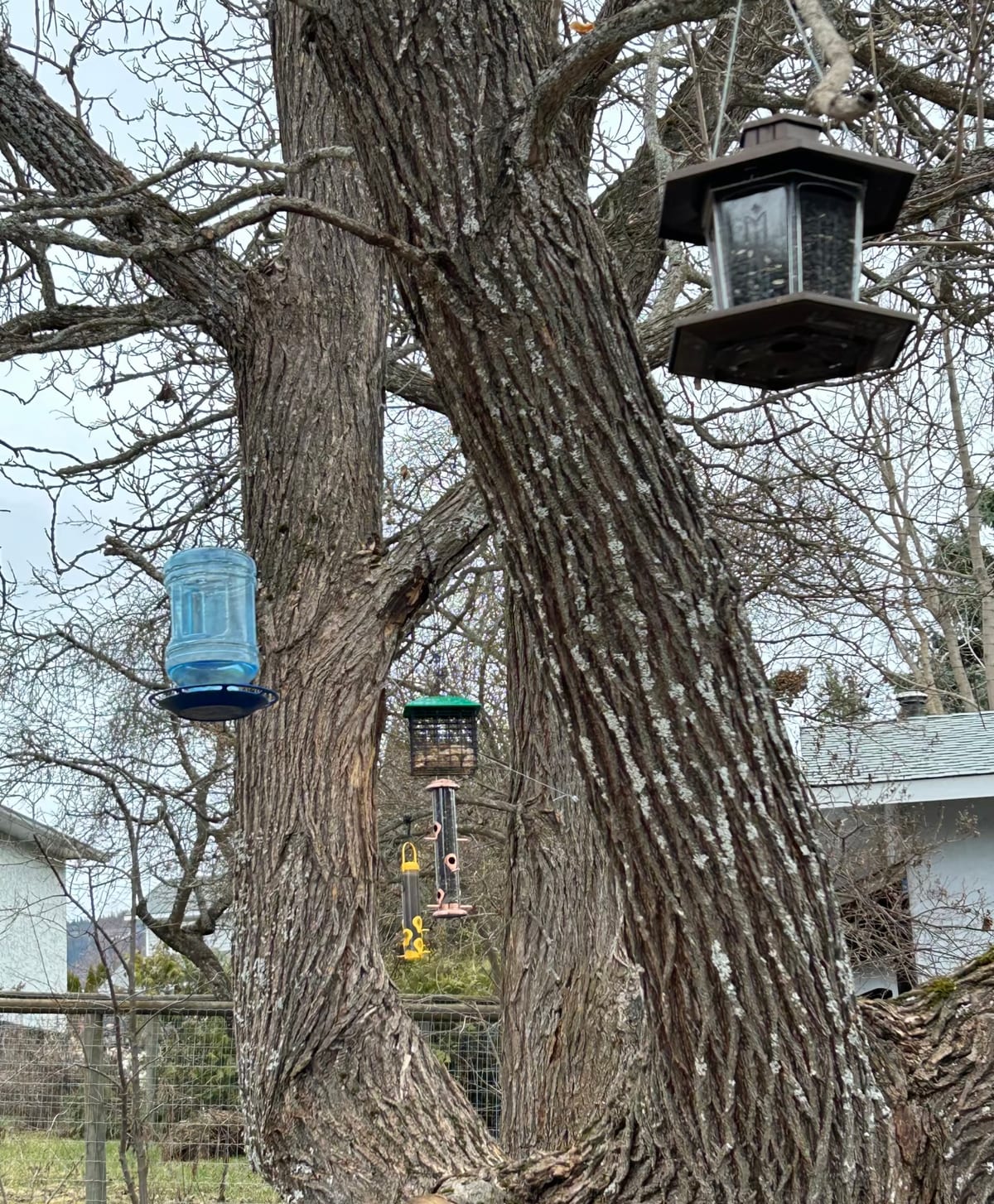
Natural food arrived
Feeders compete with whatever the season is producing. Project FeederWatch lists natural food supplies such as pine cones, berries, seeds, and insects as fluctuating from year to year, which shifts bird ranges as they follow surpluses and work around shortages.
How to tell it is this one: the decline is gradual rather than overnight, it lines up with a season rather than a day, and the birds around the neighborhood look fine. A good mast year for oaks or a heavy berry crop will empty a feeder without anything being wrong with it.
The weather changed
FeederWatch is brief about this because it is straightforward: Weather fluctuations often cause birds to shift ranges, especially in winter.
How to tell it is this one: activity tracks the weather, and returns when conditions do. The same relationship runs in the opposite direction ahead of a front, when a feeder can go from empty to crowded in a few hours.
The neighborhood changed
FeederWatch puts habitat change high on its list, noting that trees coming down or new houses going up in the neighborhood can move bird numbers in either direction.
How to tell it is this one: it is not sudden and it does not recover. If a lot came down last spring and your feeder has been quieter ever since, that is the answer, and no amount of better seed fixes it.
Why has a new feeder had no visitors at all?
Nectar feeders are a separate case with their own placement rule, covered in hummingbirds not coming to a feeder.
A new feeder is a different problem, and the most common cause is simply time.
Nobody has found it yet
The Cornell Lab of Ornithology is reassuring on this: It may take a while for the word to get out about the new feeder in town. If you are not seeing birds within a few days of setting up your feeder, try sprinkling some seeds on the ground around the feeder to make your feeding site more obvious.
Seed on the ground is the practical trick, because birds find food by sight and a scatter is far more visible than a tube. The same lag is the reason an autumn feeder is worth hanging before anything depends on it.
How long to wait before concluding something is wrong: longer than most people do. Days to weeks is normal, and it depends on how many other feeders are already in the neighborhood.
The feeder is too exposed
Cornell offers a diagnostic here that costs nothing to check: If the seed in the feeder is blowing out or getting wet, there is a good chance that your birds are getting the same treatment. Your feeder may simply be too exposed. Moving it to a calmer, more sheltered spot may increase visitation.
The state of the seed tells you about the conditions at the perch. Wet or scattered seed is evidence, not just a nuisance.
This connects to a wider constraint: where a feeder can go is governed by three rules that conflict, and cover is one of them. Small birds want somewhere to wait and somewhere to bolt to.
The yard is too bare
Cornell notes the specific case of new construction: in newly developed housing areas, birds may not feel sufficiently protected because trees and shrubs are small or few.
How to tell it is this one: look at what is within a short flight of the feeder. A feeder in the middle of an empty lawn is a feeder in the open.
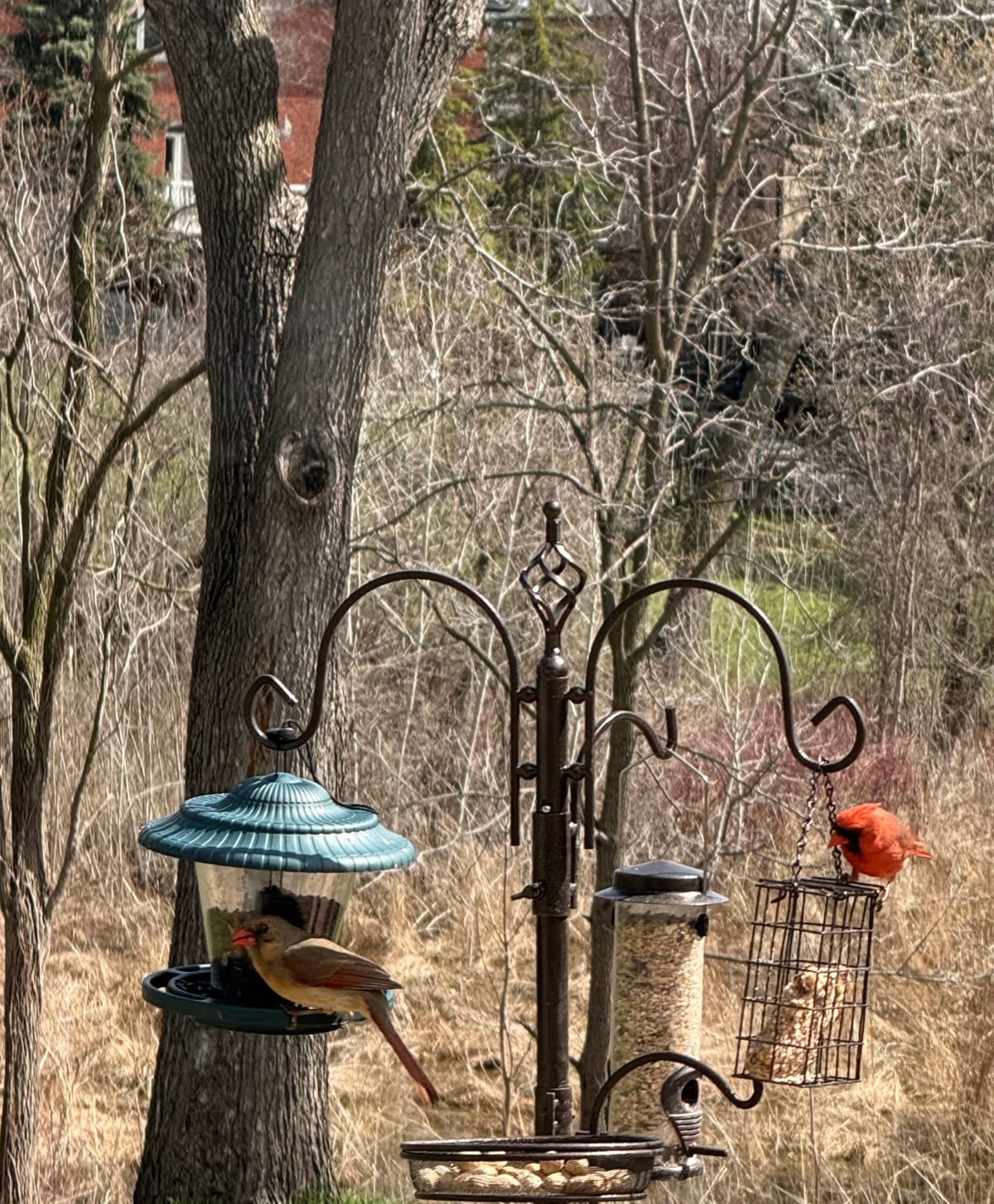
Telling the causes apart at a glance
Each cause above has a signature, and the useful ones are timing and recovery rather than anything you can see at the feeder.
| Cause | How it starts | Does it recover? | Anything to do about it |
|---|---|---|---|
| A predator moved in | Abrupt, and every species at once | Yes, when the predator moves on | Nothing for hawks. Placement, for cats |
| Natural food arrived | Gradual, tracking a season rather than a day | Yes, when the crop is finished | Nothing. You are competing with better food |
| The weather changed | Follows conditions day to day | Yes, when conditions return | Keep it stocked and out of the wind |
| The neighborhood changed | Slow, dating from a specific loss of trees or building work | No | Habitat, not the feeder |
| A new feeder nobody has found | No visits from the day it went up | Yes, days to weeks | Make it obvious, including seed on the ground |
| A feeder that is too exposed | No visits, and seed blowing out or getting wet | Yes, as soon as it moves | Move it somewhere calmer |
| A yard with no cover | Persistent low use rather than a drop | Yes, once there is cover | Add something to bolt to |
Two rows are worth reading together. The abrupt ones are almost always a predator, and the gradual ones are almost never anything you did. The only row with a permanent answer is habitat change, and it is also the only one where changing your seed cannot help.
Which causes are actually your fault?
Everything above is the world doing something. These two are the feeder.
The seed has gone bad. Wet seed molds, and moldy seed is refused. If seed has been sitting through rain in an open tray, or clumping in a tube, the birds are rejecting it on the merits. This is also the point at which the feeder stops being neutral and starts being a hazard, which is why the cleaning schedule matters more than the equipment.
It ran empty and stayed empty. Birds check a reliable source. A feeder that is empty for stretches gets dropped from the round, and re-establishing it takes longer than keeping it filled would have.
There is a third possibility that is a decision rather than a fault: the seed may simply be one they will not eat. A mix heavy on filler gets sorted through and discarded, and what looks like disinterest in your feeder is disinterest in what is in it.
When are birds not coming to your feeder through nobody's fault?
Bird numbers move on their own, and a quiet year is not evidence of a mistake. Cornell puts it plainly: bird populations fluctuate naturally from year to year, so a scarcity of feeder birds this year may be followed by an abundance next year.
That is worth holding onto before rebuilding a feeding station that was working fine.
And one thing that looks like a disturbance but is not: a single bird hammering at a window all morning is arguing with its reflection, which says nothing about whether the feeder is working.
Questions people ask
Why have birds stopped coming to my feeder? A predator is the most likely cause of an abrupt, across-the-board drop. Project FeederWatch names cats and bird-eating hawks, and says the birds return once the predator moves on. Gradual declines point instead to natural food, weather, or habitat change.
How long until birds find a new feeder? Days to weeks, and the Cornell Lab suggests scattering seed on the ground to make a new feeder more obvious if nothing has arrived within a few days.
Do birds come back after a hawk has been around? Yes. FeederWatch states that once the predator moves on, feeder birds return. Hawks at feeders have also become much more common, from 6.4 percent of FeederWatch sites in 1989 to 21.9 percent in 2014, with no evidence of declines in the prey species involved.
Why are birds ignoring my feeder but visiting my neighbor's? Check exposure and cover first, then the seed. Cornell's test is whether seed is blowing out or getting wet, since that indicates the perch conditions are poor. After that, consider whether the mix is mostly filler.
Should I move my feeder if birds are not using it? Move it toward shelter rather than away, and check the sightline to your windows while you are at it. Placement is a compromise between competing rules rather than a single best spot, and the window half of that compromise has its own set of numbers.
Is it my fault if birds stop visiting? Usually not. Predators, natural food, weather, and habitat change are all outside your control. The two causes that are yours are spoiled seed and a feeder left empty.
Why birds are not coming to your feeder: the short version
Split the question first. Birds that left point to a predator if the drop was sudden and total, and to natural food, weather, or habitat change if it was gradual. Birds that never came usually just need time, better cover, or seed scattered on the ground to make the site visible. Two causes are on you, spoiled seed and an empty feeder, and one is on nobody, since bird numbers rise and fall between years without anything being wrong. Birds not coming to feeder positions is a diagnosis before it is a purchase.
The photographs in this article were taken by our contributors, yuanyuan and Kevin Hu, and are used with permission. More on where our photographs come from.