
What a Bird Feeder Attracts Besides Birds
What a bird feeder attracts besides birds, from opossums that eat the seed to bobcats that come for what eats the seed. One mechanism explains the whole list.
A bird feeder never attracts a predator directly. What a bird feeder attracts besides birds almost always traces back to one mechanism: spilled seed feeds rodents, and rodents feed everything that eats rodents. Follow that chain and opossums, skunks, voles, snakes, coyotes, and bobcats stop being separate mysteries.
Five animals on that list already have their own article here: squirrels, raccoons, rats, hawks, and cats. This one covers everyone else, and the single idea that connects all of them.
Why does a bird feeder draw in animals that never touch the seed?
Because of a numbers problem, not a taste problem.
The Internet Center for Wildlife Damage Management frames it as a straightforward consequence of adding food to a landscape: By increasing the food supply, bird feeders encourage the rapid growth of animal populations. The technical term for this is increasing the carrying capacity of the land. An animal does not need to be interested in birdseed at all for its numbers to grow because a feeder exists nearby.
The same source splits the mechanism into two paths. One is direct: an animal that gets into the feeder itself, which is most of what the squirrel-proofing guide already covers. The other is what falls to the ground, and that second path runs further than most people expect.
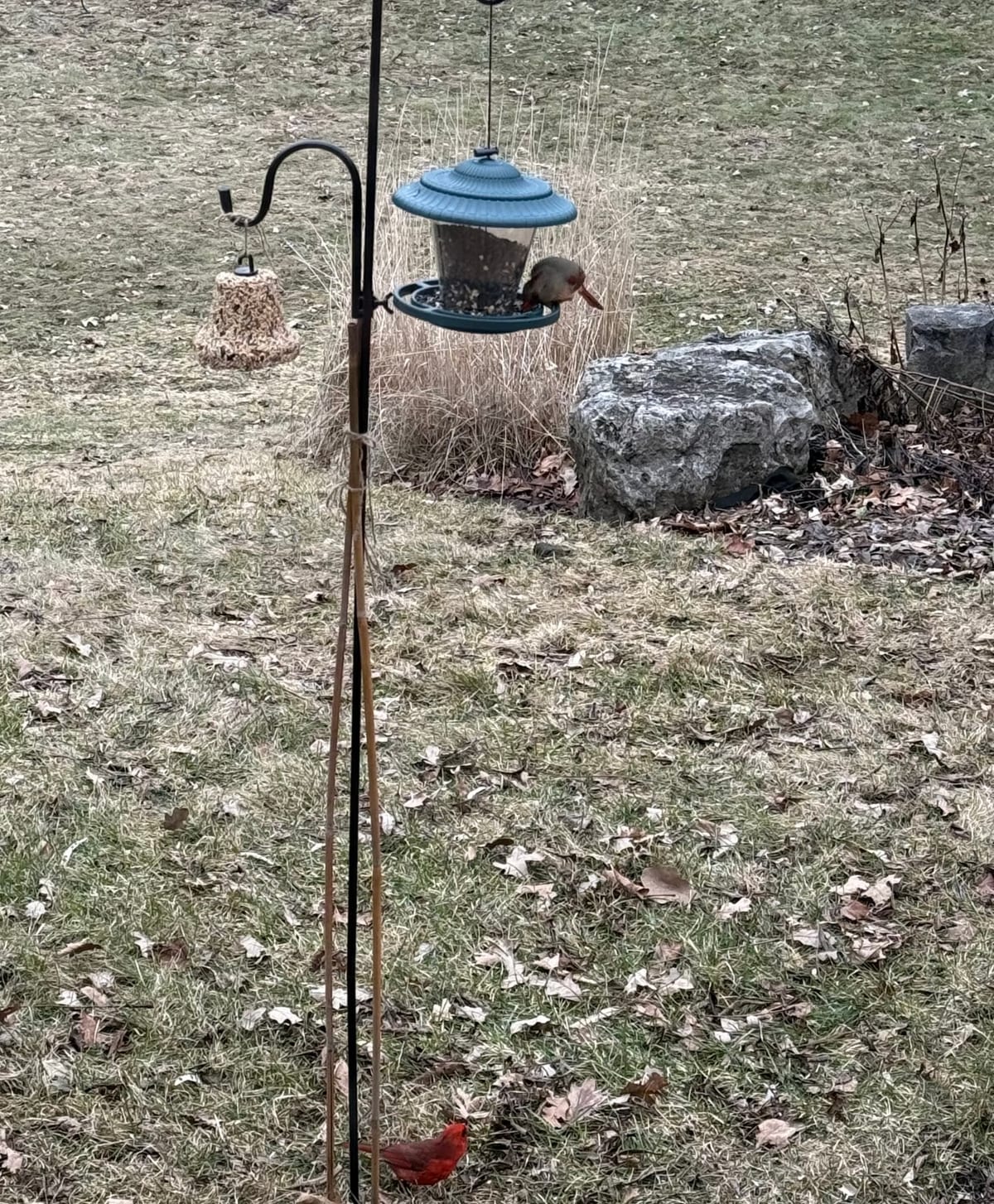
Which animals eat the fallen seed directly?
A short list, because direct consumption does not chain any further than the seed itself.
ICWDM's own inventory of what a feeder benefits names the group plainly: Carnivores, including coyotes, opossums, skunks, bears, and raccoons. Two of those, opossums and skunks, are working the ground the same way they would work a trash can: whatever landed there is fair game, seed included. Do bird feeders attract skunks and opossums specifically because of the seed itself, and not because of anything hunted underneath it.
Raccoons belong on the same list, and North Carolina State Extension states it without qualification: Raccoons actively use bird feeders. What it actually takes to keep them out is covered in its own article, how to keep raccoons off bird feeders.
Bears are on this list too, and the site's existing coverage of when to stop feeding for the season already treats bear activity as the reason some states set a hard calendar date rather than a suggestion.
Mice and rats round out the direct consumers, and the mechanism is the same one North Carolina State Extension names for the whole category: birdseed put out to attract songbirds can fall on the ground below bird feeders and attract mice. What a cheap seed mix does to make that worse, and what to do about the rats that follow, is its own article.
Voles are on this list as well, and they get a section of their own next, because most of what gets blamed on them is blamed on the wrong animal.
Moles or voles: which one is actually under your feeder?
Voles, almost always, and the mix-up has a simple cause: the two animals tunnel in the same lawns and get blamed for each other's damage constantly.
Purdue Extension draws the line at diet. Moles belong to the group of mammals known as insectivores and thus are related to the shrew. They feed primarily on earthworms, beetle grubs, ants, and other animals which live in the soil. A mole is not working your feeder for the seed. A smaller part of their diet consists of various seeds and vegetable matter, so the connection is not nothing, but it is not what a mole spends most of its time doing in your yard.
Voles are built for exactly the opposite diet. Voles are herbivores. They eat seeds as well as leaves and stems of grasses and sometimes other green vegetation and occasionally, roots and bulbs, and Purdue names the feeder specifically: Voles may also take advantage of spilled seeds from bird feeders.
The damage even reads differently once you know which animal to look for. The damage of moles and voles is easily distinguished. Moles excavate tunnels just below the surface as they forage for soil insects and worms, and this interferes with mowing. Voles remain primarily aboveground, forming 2-inch-wide surface runways, which may go unseen until winter snow melts.
Which animals come for what the seed feeds, not the seed itself?
A longer chain, and the one most people do not expect a bag of sunflower seed to start.
Washington's Department of Fish and Wildlife states the link directly, in its guidance on living with snakes: Mice and rat populations can be reduced by keeping food (including spilled seed under bird feeders) inaccessible to these animals. Do bird feeders attract snakes on their own? No. A snake at a feeder is there for the mice the seed drew first, so reducing spillage reduces snake habitat by the same motion, one step removed.
The same one-step-removed logic reaches predators most people would never connect to a bag of seed. ICWDM's guidance on bobcats gives the instruction in almost identical language to the snake case: Modify bird feeders to prevent seed from reaching the ground, as spillage attracts rodents. Do bird feeders attract bobcats directly? Not for the seed. For the rodents the seed produced, in a yard that otherwise would not support them.
Coyotes run the same chain, named specifically in ICWDM's list of carnivores a feeder benefits. Foxes are commonly assumed to follow the same path, and the mechanism would predict it, but none of the sources checked for this article name foxes at a feeder specifically. That gap is stated here rather than papered over with an assumption.
What about squirrels, hawks, and cats?
Squirrels are the one animal on this whole list that goes after the feeder itself rather than what falls from it, which is why the fix is about geometry rather than about spillage.
Hawks are a different case again: what they are hunting is the birds, not anything the seed produced secondhand, and a sudden empty feeder with no other change is the usual sign one has found your yard.
Cats are the last of the five, and the one this site treats as genuinely different from the rest, since placement can actually fix it where nothing short of removing the feeder does much for a hawk.
Does this mean you should stop feeding birds?
No, and the chain itself is the reason why.
Almost everything on this page traces back to spilled seed on the ground, not to the feeder or the birds it draws. That is the one link in the chain a person can actually shorten: a catch tray, a no-mess blend, and seed cleared before dark do more against this whole list at once than any single-species fix does against one animal on it. Whether feeding is worth doing in the first place is a separate question with its own answer, and this list is not a reason to change that answer.
Questions people ask
Do bird feeders attract snakes? Not for the seed. A snake at a feeder is there for the mice and rats the spilled seed drew first, per Washington's Department of Fish and Wildlife.
Do bird feeders attract skunks or opossums? Yes, and directly. Both are working the ground for whatever fell, seed included, the same way they would work an open trash can.
Do bird feeders attract coyotes? Indirectly. ICWDM names coyotes among the carnivores a feeder benefits, through the same rodent chain that reaches snakes and bobcats.
Will a bird feeder attract bobcats? Only through what the seed feeds. ICWDM's bobcat guidance names spillage-fed rodents as the actual draw, not the seed.
Does spilled bird seed attract voles? Yes, by name. Purdue Extension states that voles take advantage of spilled seed from bird feeders. Moles, which are often blamed for the same damage, are insectivores and are drawn to the insects in the soil rather than the seed.
Do bird feeders attract mice and rats? Yes, directly, and this is the first link in almost every chain on this page. The full picture, including what a cheap seed mix does to make it worse, is in what brings rats to a feeder.
What a bird feeder attracts besides birds: the short version
One mechanism accounts for almost everything on this list: seed on the ground feeds rodents, and rodents feed whatever eats rodents. Opossums and skunks and voles are at the first link. Snakes, coyotes, and bobcats are further down the same chain, drawn by what the seed produced rather than by the seed.
The mole and the vole are the case worth remembering, because it is the one where the wrong animal gets blamed and something gets done about it anyway. A mole trap set for tunnels under a feeder catches nothing, because the resident doing the digging eats insects, not seed. The animal actually eating the spilled seed is running surface trails, not tunnels, and it was never the one anyone set the trap for.
This article contains no affiliate links. Every claim about a specific species is attributed to the wildlife agency or extension service that published it, and the gap on foxes is stated rather than assumed.