
Winter Bird Feeding: What Actually Changes When It Gets Cold
Winter bird feeding guide: which foods matter in cold weather, why suet works, why water is harder to find than food, and what feeders really provide.
Winter bird feeding changes on three fronts at once: what the birds need, what is available to them naturally, and what your equipment has to survive. Most winter feeding advice covers the first and ignores the other two.
The Cornell Lab of Ornithology describes the season plainly in its own bird-feeding publication: In much of North America, winter is a difficult time for birds. Days are often windy and cold; nights are long and even colder. The lush, berry-laden vegetation of summer and fall has withered or been consumed, and most insects have died or become dormant.
That last clause is the one that reorganizes everything. The insects are gone.
What winter bird feeding actually changes
Songbirds are not eating the same food in January that they ate in June. Cornell: During fall and winter, however, nonmigratory songbirds must shift their diets to fruits and seeds to survive.
This is why a feeder means something different in winter than in summer. In warm months you are supplementing a diet built largely on insects. In winter you are supplementing a diet that has been forced onto seeds and fruit, at the exact point when finding either has become harder.
The foods that earn their place in the cold
Fat is the winter currency, and the food that delivers it is the one most people think of as a summer curiosity.
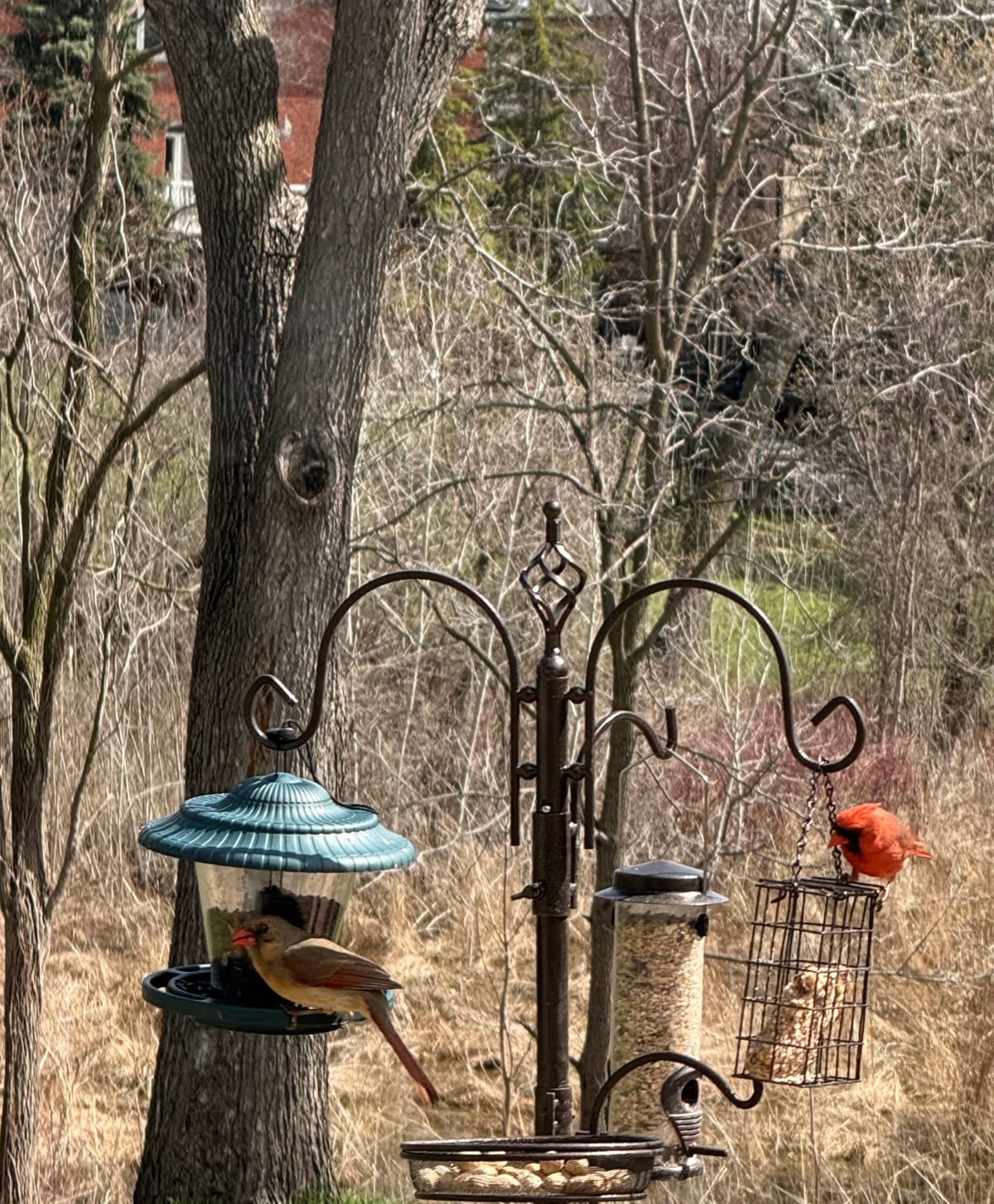
Cornell is direct about who it reaches: You can also attract insect-eating birds such as chickadees, woodpeckers, and nuthatches to your yard by offering peanut butter or suet (beef fat). Birds that live in cold climates especially appreciate these high-energy foods.
The wording carries the whole mechanism. Suet reaches insect-eating birds. The species whose food supply just disappeared are exactly the species suet is for. It is a fat substitute standing in for the insects that died or went dormant.
That disappearance is also what separates winter from autumn, when the wild food supply is at its richest and a feeder is not yet doing much work.
Project FeederWatch describes what suet is, and it is less exotic than the packaging suggests: Most suet is beef kidney fat, which is inexpensive and available at many meat counters, and it is a good choice for attracting insect-eating birds.
Seed still matters, and black-oil sunflower still leads on the same two properties that make it the year-round default. Cornell: These seeds have a high meat-to-shell ratio, they are nutritious and high in fat, and their small size and thin shells make them easy for small birds to handle and crack. High fat and easy to open, which in a cold snap is the combination that counts.
Suet comes with a season attached
Suet is the one winter food with an explicit warm-weather warning, and both sources give it.
Cornell: Suet can quickly become rancid in warm weather, but some commercial suet cakes and doughs can be used year-round. FeederWatch puts the same caution on the shopper: Be careful if you offer suet in hot weather; it may become rancid if it has not been specially processed.
The distinction that matters is plain suet from a meat counter versus a processed commercial cake. The first is a cold-season food. The second is formulated to survive heat, and the label is what tells you which you have.
Water for birds in freezing weather is harder to find than seed
The part of winter feeding that gets least attention is the one Cornell puts most simply: Unfrozen water can be as hard for birds to find in winter as food.
Birds can dig seeds out from under snow. They cannot drink ice. And drinking is only half of what water is for, since Cornell notes birds need it not only to drink, but also to bathe in, because clean feathers are what insulation depends on. A dirty, matted bird is a colder bird.
Keeping water liquid is a solved problem: An immersion-style water heater will keep your birdbath unfrozen in the winter. Cornell also points out that water attracts birds a feeder never will, since some species have no interest in seed at all.
Nectar is the harder case in cold weather, and it has no equivalent solved answer. Audubon states that the feeder must not be allowed to freeze, without prescribing how, which matters in the regions where hummingbirds are present through the winter.
Heated baths carry a hazard of their own in extreme cold, which is covered properly in water for birds in winter.
Warmth is the third thing a yard can offer, and an empty nest box is the cheapest source of it, provided it was converted into a roost box in autumn.
Do birds depend on feeders? Not the way you think
One finding should change how you feel about a week away from home, and about treating winter feeding as a life-or-death obligation.
Cornell, citing research: studies show that even birds with full access to feeders consume three-quarters of their diet elsewhere, and that when feeder birds are deprived of supplemental foods, they quickly revert to an all-natural diet.
Three-quarters. Even with a full feeder available, most of what a bird eats comes from somewhere else. The feeder is a supplement, and the birds treat it as one.
Cornell's practical advice follows from that: taper off gradually before a trip if you can, and otherwise do not fret, because natural food sources vanish overnight under snow all winter and birds are built for it. The same fact governs when it is fine to stop altogether.
This is worth holding onto for a second reason. Guilt is what keeps people topping up a filthy feeder they should have taken down for a week to scrub, and a dirty feeder does more harm than an empty one.
The same over-worrying shows up in a different form: a round, fluffed-out bird at the feeder on a cold morning, which reads as distressed and is actually just insulated.
Does feeding stop birds migrating?
The worry underneath the question is whether feeding birds stops them migrating and leaves them stranded in the cold. No, and the mechanism is well understood. Cornell: The clue that most birds use to migrate is the change in day length rather than the availability of food.
Peak migration also happens in late summer and fall, when natural food is abundant anyway, so a feeder is not the signal that holds a bird in place.
What winter does to the equipment
Cold weather is hard on hardware in ways that summer hides.
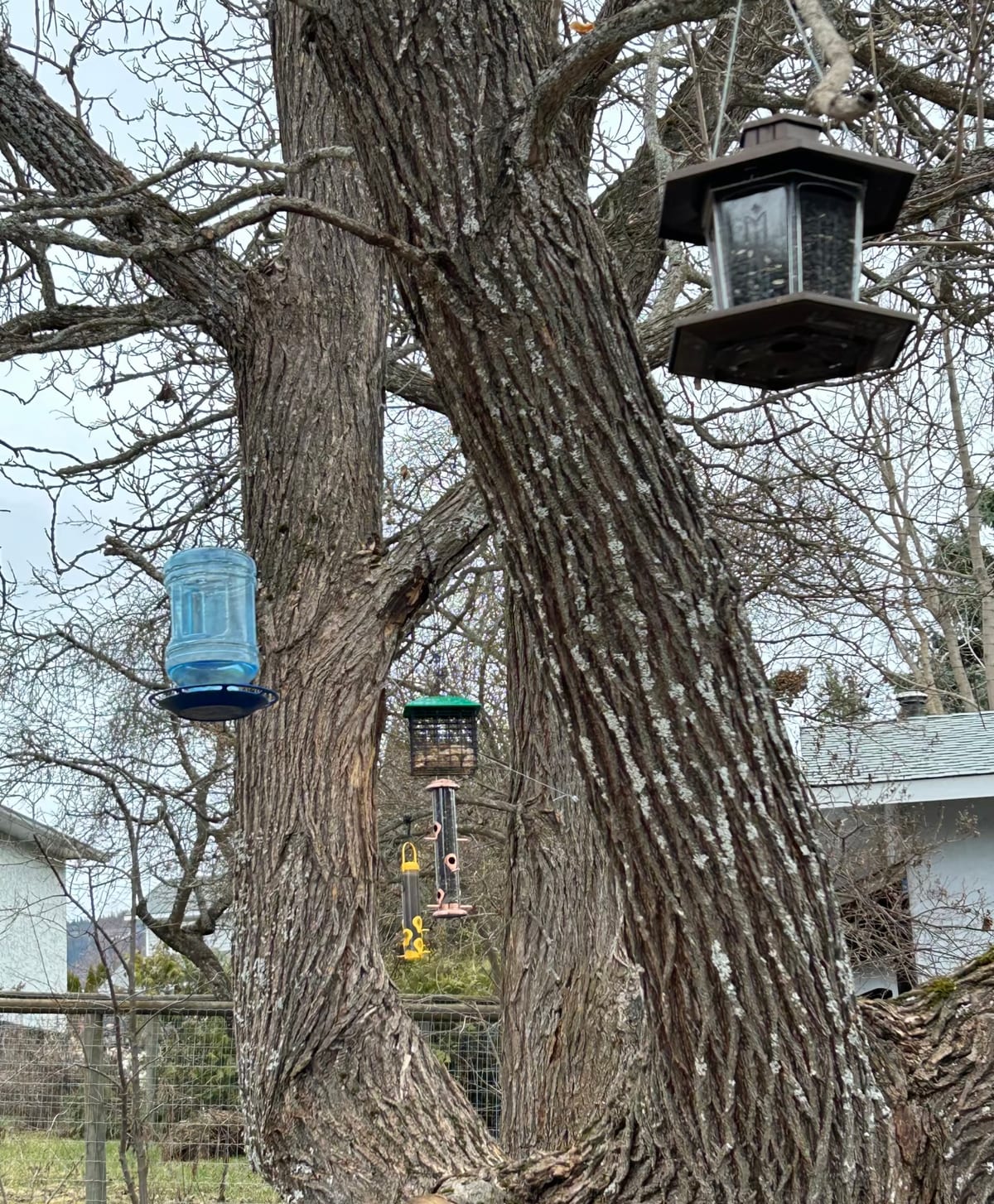
Cornell's specification for a feeder is a maintenance list as much as a purchase guide: The ideal bird feeder is sturdy enough to withstand winter weather, tight enough to keep seeds dry, large enough that you don't have to refill it constantly, and easy to assemble and keep clean. Note that three of those four properties are about surviving weather and being maintainable rather than about attracting birds, which is the same conclusion the feeder types reach from a different direction.
Wet seed is the recurring winter failure. If the seed is getting soaked, Cornell observes that the birds are getting the same treatment, and the feeder is probably too exposed.
A suction-cup window feeder has a winter failure of its own: cold hardens the cups. That mount, and the rest of what an apartment or balcony feeder has to live with, is a different set of constraints from a yard pole.
A feeder with a camera in it adds a failure Cornell was not writing about: the battery, which the manufacturers rate for a month in summer and warn will not last that long in the cold.
And the ground work does not stop because it is cold: Another important maintenance activity is to periodically rake up birdseed hulls beneath your feeders. Decomposing hulls may harbor bacteria that could spread bird diseases to your feathered guests and may kill your lawn or flowers.
Suet has more to it than its winter role: what it is made of, which forms survive warm weather, and how high it has to hang are covered in suet for birds.
Questions people ask
What should I do with my bird feeder while on vacation? Nothing urgent. The three-quarters finding above is the answer: birds take most of their diet elsewhere and revert to it quickly when a feeder empties. Cornell's advice is to taper off gradually before a trip if you can, and otherwise not to worry. A nectar feeder is the exception, because sugar water left standing in warm weather spoils on its own schedule rather than yours, so empty and wash that one before you go.
What should I feed birds in winter? High-fat foods first: suet or peanut butter for the insect-eaters whose food supply is gone, and black-oil sunflower for the widest range of seed-eaters. Cornell singles out chickadees, woodpeckers, and nuthatches as the ones high-energy offerings reach.
Can I put out suet all year? Plain suet from a meat counter goes rancid quickly in warm weather. Some commercial cakes and doughs are processed for year-round use, so the product label decides the answer, not the season alone.
Do birds need water in winter? Yes, and Cornell says unfrozen water can be as hard to find as food. They need it for drinking and for bathing, since clean feathers are what keeps them insulated. An immersion heater keeps a bath usable, and the hazard that comes with it is the part this page leaves out.
Will birds starve if I stop filling my feeder? Research cited by Cornell found that birds with full feeder access still take three-quarters of their diet elsewhere, and revert to natural food quickly when supplemental feeding stops. Taper off if you can, but a break is not a crisis.
Does feeding birds keep them from migrating? No. Day length is the migration cue, not food availability, and peak migration happens when natural food is plentiful.
Winter bird feeding: the short version
Winter removes the insects and forces songbirds onto seeds and fruit, which is why fat becomes the thing worth offering: suet and peanut butter reach the insect-eaters directly, and black-oil sunflower stays the broadest seed on high fat and thin shells. Plain suet belongs to cold weather only. Unfrozen water is as scarce as food and does something seed cannot, since bathing is what keeps insulation working. Equipment needs to stay dry and come apart for cleaning, because the cleaning schedule does not pause for winter.
And the feeder is a supplement rather than a dependency. Three-quarters of what those birds eat comes from somewhere else, even when your feeder is full. Winter bird feeding is a supplement you provide, not a lifeline they depend on.
The photographs in this article were taken by our contributors, yuanyuan and Kevin Hu, and are used with permission. More on where our photographs come from.