
When Should You Start Feeding Birds in the Fall?
When to start feeding birds in the fall: not urgently, since autumn is the fattiest season in the wild. Why to hang the feeder in September anyway.
The useful answer to when to start feeding birds in the fall is that the birds do not need you yet, and you should hang the feeder anyway.
Autumn is the richest stretch of the natural food year. What a feeder buys you in September is not nutrition, it is the weeks of lead time birds need to find the thing before the weather turns.
Do birds need a feeder in the fall?
Mostly not, and the National Wildlife Federation says so without hedging: As long as birds have access to many fruiting native plants at this time, supplemental foods like bird feeders are typically not needed until these food sources become depleted in winter.
That sentence rearranges the usual picture. The season people associate with getting ready for winter is the season when getting ready is easiest.
What are they eating instead?
Fat, and more of it than at any other time of year.
The National Wildlife Federation describes the autumn spread: As fall approaches, nature provides a buffet of high-fat foods including berries, seeds, nuts, and insects that help birds to bulk up for the cold of winter or for their long migrations. Late-blooming flowers, grasses, and trees all go to seed in the same window.
The numbers are specific. On spicebush: The bright red spicebush berries that ripen in fall have a fat content of a whopping 35% to 50%, which is a huge leap up when compared to the relatively low-fat summer fruits like black raspberries, which often contain less than 1% fat.
And the comparison NWF draws from it, in its own terms: a single red spicebush berry provides the same amount of fat as about 50 blackberries.
A bird working a spicebush in October is not scraping by. The wild larder is at its best in exactly the weeks people start feeling they ought to help.
When to put bird feeders out for winter: when does the season begin?
If you want an institutional answer rather than a guess, Project FeederWatch defines its own: FeederWatch is a November-April survey of birds that visit backyards, nature centers, community areas, and other locales in North America.
November through April. The people who run the largest feeder-bird dataset in North America start counting in November, because that is when feeder activity becomes worth counting.
That season is open to anyone with a window, and joining the count is a smaller commitment than it sounds.
Then why hang it in September?
Because a feeder is not found on the day it is needed.
The Cornell Lab is direct about the lag: It may take a while for the word to get out about the new feeder in town. If you are not seeing birds within a few days of setting up your feeder, try sprinkling some seeds on the ground around the feeder to make your feeding site more obvious.
That delay is the whole argument for an early start. A feeder hung in September has weeks to become part of the local routes while nothing depends on it. A feeder hung during the first hard freeze is a stranger at the worst possible moment, and the reasons birds take their time finding a new feeder do not pause for the weather.
So the September feeder buys familiarity. Fill it lightly. Nothing is riding on it yet.
What changes when winter arrives?
Three things at once, and they compound.
The National Wildlife Federation lays out the first two: food sources begin to dwindle in winter. At the same time, active insects become harder to find as the temperature drops. The third is on the other side of the ledger, since birds are also burning extra energy keeping warm.
Once those three arrive together, the feeder is doing real work: what to put out, and why suet stands in for the missing insects. Unfrozen water is as hard to find as food at the same time, and a heater solves freezing while creating a bathing risk.
Birds prepare for this in ways that are easy to miss if you are only watching the feeder. NWF notes that some species, including nuthatches and chickadees, hide cached seeds and even arthropods behind loose bark or in holes, and gives a nice specific: White-breasted nuthatches are known to hide individual seeds under bits of loose tree bark, sometimes even disguising them with bits of moss or lichen.
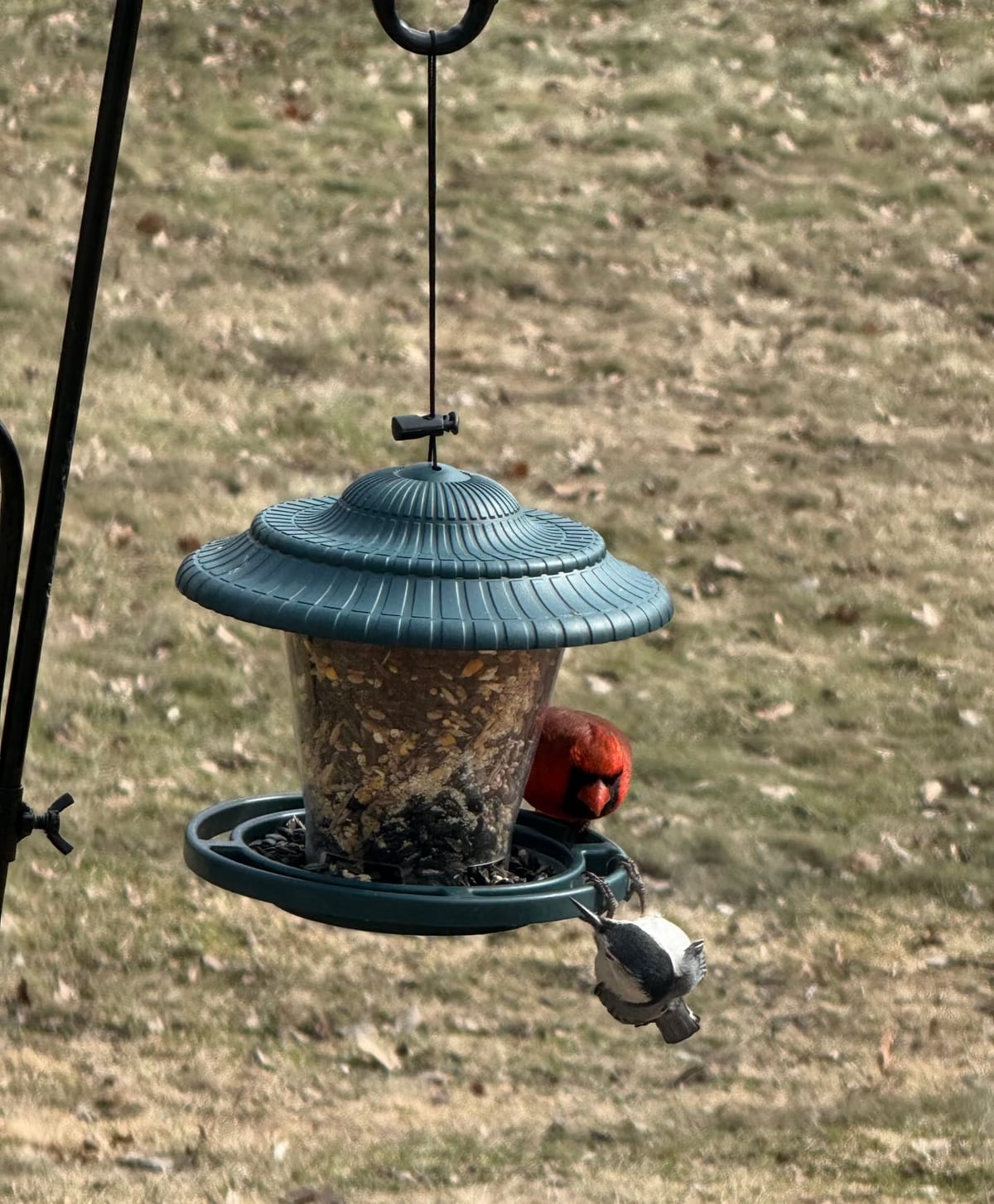
A feeder in autumn is partly stocking a pantry you will never see. The same instinct runs in the animal you are probably trying to keep off it, since this is also the season squirrels are caching hardest.
When to start feeding birds in the fall: the calendar
| Season | Wild food | What a feeder is for | What to do |
|---|---|---|---|
| Late summer | Insects abundant, fruit ripening | Watching, little else | Nothing urgent |
| Autumn | Richest of the year, high-fat berries and seed | Getting discovered | Hang it, fill it lightly |
| Winter | Dwindling, insects gone, heat costs rising | Genuine supplement | Keep it full and clean |
| Spring | Returning, bears waking | Depends where you live | Check bear rules |
Is there something better to do with an autumn afternoon?
There is, and it would be dishonest to leave it out just because it is not about equipment.
The National Wildlife Federation's actual recommendation for this season is not about feeders at all: Instead, focus on making sure that your garden offers a good number of fall seeding or fruiting plants like asters, elderberry, sumac, juniper, and so many more.
This site is about feeders and we are not going to pretend otherwise, so one paragraph is what this gets. But the smallest version of that advice costs nothing and is worth knowing: leave the seed heads standing. Coneflowers, asters, and grasses left uncut through autumn are the food supply NWF is describing, and cutting the garden back tidily in October removes it.
What should the first setup be?
If autumn is when you are starting from nothing, the decisions are covered elsewhere on this site and there is no point restating them here. Briefly: which feeder type suits which birds, where it can go without costing the birds something, and what is actually in a bag of mixed seed. If the space is a balcony or a window rather than a yard, those three answers change.
The one thing worth adding is a sequencing point. Hang the feeder before you commit to a big bag of seed. Fill it lightly for a few weeks, see what arrives, and buy for the birds you actually have.
Autumn has one other job attached to it if you own a nest box, and it comes with a genuine research disagreement: whether to clean it out, and why the answer depends on your state.
Does starting late hurt them?
No, and the evidence points firmly the other way.
Birds with a full feeder available still take most of their food elsewhere, which is covered in detail in the article on when to stop. A feeder that appears in December is simply a bonus arriving late. There is no window you can miss that leaves birds worse off than if you had never hung one.
That cuts both ways, and it is the reassuring half of everything above. Start in September because it is convenient and gives the birds time to notice. Start in January if that is when you got round to it.
Questions people ask
When should I start feeding birds in the fall? Any time from early autumn works, and September is a good default because birds need weeks to find a new feeder. The National Wildlife Federation notes that supplemental food is typically not needed until natural sources are depleted in winter, so an early start is about familiarity rather than necessity.
Do birds need bird feeders in the fall? Generally no. Autumn is the richest stretch of the natural food year, with high-fat berries, seeds, and nuts available. NWF reports fall spicebush berries at 35% to 50% fat, against under 1% for low-fat summer fruits like black raspberries.
When does bird feeding season start? Project FeederWatch, the largest feeder-bird survey in North America, runs November through April. That is the window when feeder activity is high enough to be worth counting.
Is it too early to put out bird feeders? No. An early feeder does no harm, and it gives birds time to add it to their routes before winter, when it starts to matter.
What do birds eat in the fall? Berries, seeds, nuts, and insects. NWF describes autumn as a buffet of high-fat foods that lets birds bulk up for winter or for migration.
Will birds go hungry if I start feeding in winter instead? No. Birds take most of their diet from natural sources even when a feeder is available, so a late start costs them nothing.
When to start feeding birds in the fall: the short version
The honest sequence is that autumn feeds birds better than you can, winter is when the feeder earns its place, and the gap between those two facts is exactly why you hang it early. September gets the feeder onto the local map while the stakes are low.
So the September job is small. Put it up, put a little seed in it, and let it be discovered. Then leave the coneflowers and asters standing when you tidy the garden, because those seed heads are doing the work your feeder is only rehearsing for. When to start feeding birds in the fall is less about the birds than about giving the feeder time to be found.
The photograph in this article was taken by our contributor yuanyuan and is used with permission. More on where our photographs come from.