
Bird Seed Filler: What You Are Actually Paying For
Bird seed filler is the milo, wheat, and cracked corn most birds refuse. Why cheap mixes contain it, and the regional exception almost nobody mentions.
A bag of bird seed filler costs the same to carry home as a bag of seed birds will eat. The opposite case, a specialist seed that costs more than anything else in the aisle, has its own reasons. The difference shows up later, on the ground, in the form of the grains they picked out and dropped. Price per pound is the wrong measurement, and the right one is closer to price per pound that actually gets eaten.
The main offender has a name: milo. Project FeederWatch describes it as A reddish-colored, round grain, milo is often a major component of inexpensive seed mixes, and then delivers the verdict most seed bags would rather you not read: Unfortunately, it is not a favorite of most birds, and the seed often goes to waste.
That verdict comes with a regional exception, which almost nobody writing about seed bothers to include.
What bird seed filler is doing in the cheapest bags
The reason the cheapest bird seed wastes the largest share of any bag is historical, and stranger than you might expect.
Before the 1970s, nobody had systematically checked which seeds birds prefer. As Audubon tells it: In fact, before Geis's groundbreaking research, the ingredients of commercial birdseed mixes were largely chosen as a matter of custom, lore, and convenience.
Aelred Geis, working for the US Fish and Wildlife Service, ran the study that changed that. He tested 23 ingredients, including real losers like milo, wheat, hulled oats, and rice. And the picture of the industry he was testing is worth sitting with: When Geis conducted his study in the 1970s, common ingredients included numerous cheap grains that could fill out a bag of seed but that few birds actually liked.
That was half a century ago. The research is settled and public. The cheap grains are still in the bags, because the economics that put them there never changed: filler is what makes a bag heavy and inexpensive, and weight is what people compare in a store aisle.
The exception nobody mentions: milo is a regional question
The standard advice oversimplifies here: the same page that condemns milo also qualifies it.
Project FeederWatch: Western birds tend to consume milo more than eastern birds. In the east, it is best to avoid mixes with large amounts of milo.
That sentence carries two claims, not one. In the eastern half of the continent, milo is close to dead weight and the advice to avoid it stands. In the west, birds eat more of it, which makes a milo-heavy mix a different proposition depending on which side of the country you are standing on.
Almost every article you will find treats milo as universally worthless. The organization running the continent's largest feeder-watching survey does not, and the distinction matters if you happen to live in the half of the country the blanket advice was not written for.
What actually gets eaten
The seed with the broadest appeal is not in dispute. Project FeederWatch on black-oil sunflower: This small sunflower seed is high in energy and has thin shells, making it the preferred food item for a wide variety of birds.
Two properties, and the second one does the quiet work. High energy matters in cold weather. But thin shells are what make the seed available to small birds at all, since a bird has to open the thing before the energy inside counts for anything.
The guest list is broad: Black-oil sunflower is among the favorite feeder foods of cardinals, chickadees, finches, and sparrows, and Woodpeckers even consume these seeds on occasion.
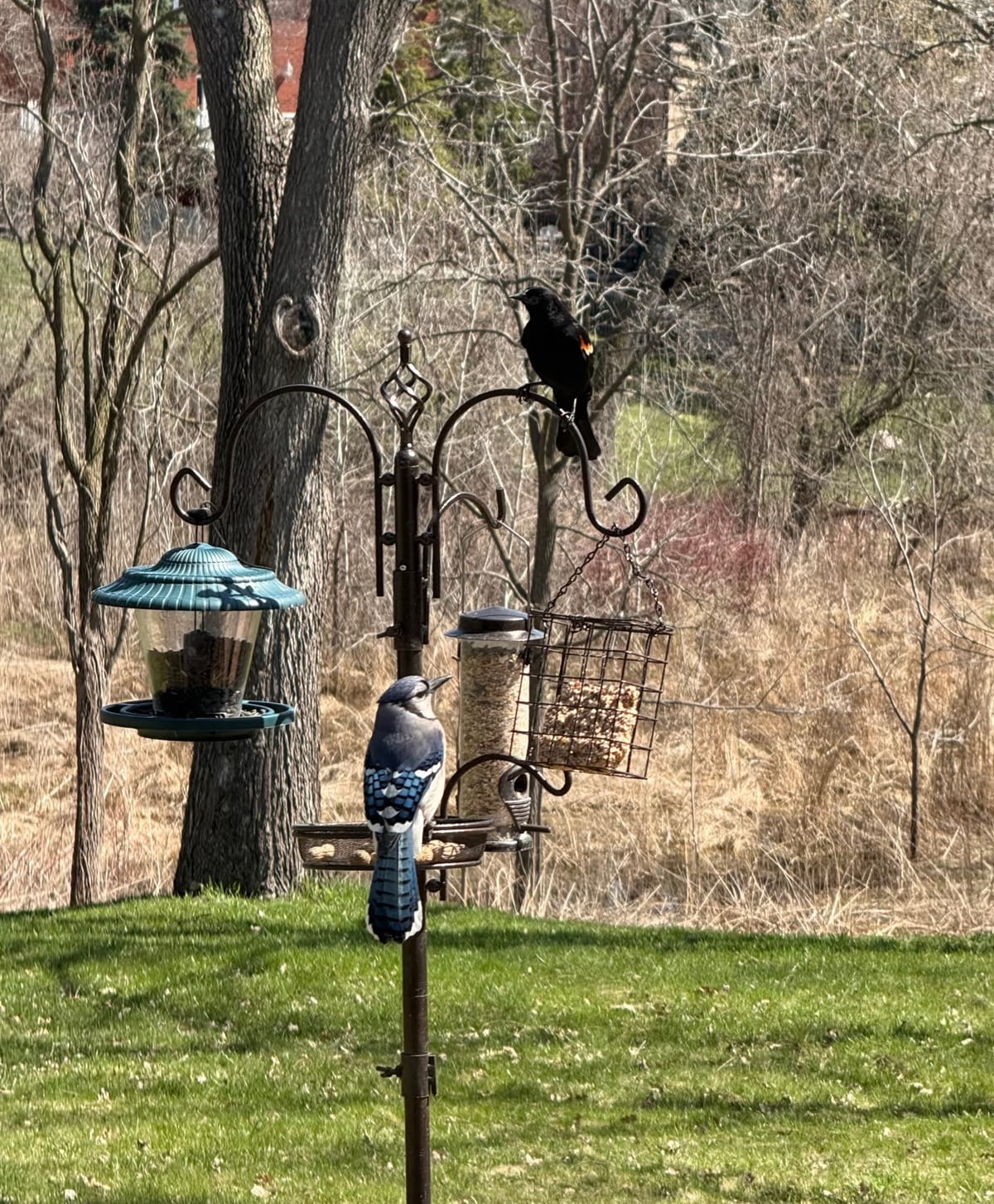
There is a second reason to care about shells that has nothing to do with the birds. Audubon, on hulled mixes: Without shells or filler seeds like red milo (very few species prefer red milo), everything in the mix gets eaten. Nothing eaten is nothing left on the ground, which is where the rodent problem starts, and rats are only the first stop on the fuller list of what that ground feeds.
Not all rejected seed is filler
One distinction worth keeping straight, because it cuts the other way.
Safflower is unpopular with a lot of birds, and it is not filler. Project FeederWatch is candid about the popularity: Safflower attracts cardinals and other big-billed birds. However, in our experience, most birds prefer sunflower seeds over safflower. What separates it from milo is that safflower is bought on purpose, for a reason, since squirrels dislike the taste and will generally avoid it. Reduced bird interest is the price of admission, and the full trade is worth understanding before you make it.
Nyjer is similar: narrow appeal, deliberately chosen. FeederWatch notes it attracts finches including American Goldfinch, Pine Siskin, and Common Redpoll.
Filler is the seed in the bag that nobody chose and nobody eats. A specialist seed is one you selected knowing exactly which birds it excludes.
What filler actually costs you, in your own numbers
Price per pound is the wrong measure because you are not buying pounds, you are buying pounds that get eaten. The correction is one division, and it is steeper than it feels.
Take the shelf price per pound and divide by the share of the bag birds will actually eat. That gives the real price of the food that stays in the feeder.
| If this share of the bag is filler | You are really paying | On a $20 bag |
|---|---|---|
| None | 1.00 times the shelf price | $20 |
| 10 percent | 1.11 times | $22.20 |
| 25 percent | 1.33 times | $26.60 |
| 40 percent | 1.67 times | $33.40 |
| 50 percent | 2.00 times | $40 |
| 60 percent | 2.50 times | $50 |
| 75 percent | 4.00 times | $80 |
The $20 column is an illustration, not a price we are quoting: put your own bag in it. The multiplier is the part that holds regardless.
Two things fall out of the arithmetic. The curve is not linear, so the difference between a 25 percent and a 50 percent filler bag is much larger than the gap between the two prices on the shelf suggests. And a mix that looks half the price of straight sunflower stops being cheaper somewhere around the halfway mark, without anything on the label changing.
This is also why the waste is not only financial. Everything in the numerator that never gets eaten ends up on the ground, which is how a seed bag becomes a rodent problem.
How to read a seed bag
The ingredient list is ordered by weight, which makes it more informative than the marketing on the front.
Black oil sunflower vs mixed seed: look at what comes first. If milo, wheat, cracked corn, or oats lead the list, most of the bag's weight is grain that eastern birds will largely reject. Those same grains hold water better than sunflower does, which is why mixed seed behaves worst of the three types when a bag gets damp in storage.
Compare on the useful number. A bag that is half filler at half the price is not a saving, since you are paying the same for the fraction that gets eaten and then sweeping up the rest.
Buy straight seed when unsure. Black-oil sunflower alone brings in the widest range of feeder birds. A mix is a convenience, not an upgrade, and it only beats straight sunflower when every component was chosen for a species you actually have.
Match the seed to the feeder. Small seeds run out of large ports and get scattered by larger birds, so filler waste and feeder type compound each other. That interacts with where the feeder is placed and how much falls where you will have to deal with it.
Questions people ask
What is filler in bird seed? Cheap grains added to increase weight and lower price rather than to feed birds: milo, wheat, cracked corn, hulled oats, and rice are the usual ones. Geis tested them among 23 ingredients and grouped them with what Audubon calls the real losers.
Do birds eat milo? Some do, and geography decides. Project FeederWatch says western birds consume more milo than eastern birds, and recommends avoiding milo-heavy mixes specifically in the east.
Is black oil sunflower really the best bird seed? It has the broadest appeal, because it combines high energy with thin shells that small birds can open. Cardinals, chickadees, finches, and sparrows all favor it, and woodpeckers take it occasionally.
Why is cheap bird seed cheap? Because filler grain costs less than sunflower and bags are compared by weight and price in the aisle. The formula predates the research showing birds refuse those grains, and it has outlived it by about fifty years.
Does filler seed cause problems beyond waste? Rejected seed does not vanish. It accumulates under the feeder, where it has to be cleaned up and where the milo and wheat in it are the most likely things to come up as grass, and hulled mixes exist partly to avoid that. Cheap seed is wasteful without being dangerous, which puts it at the mild end of the things that should not go out for birds. The positive version of the same decision, which food reaches which bird, is in types of bird food. King County's public health department is direct about the consequence: filler-heavy blends end up on the ground where they attract rats.
Bird seed filler: the short version
Bird seed filler is the part of the bag chosen for the buyer rather than the bird: milo, wheat, cracked corn, oats. The research that identified it is fifty years old and the grains are still in the mixes, because bags are sold by weight. Black-oil sunflower remains the broadest-appeal seed on two properties, energy and thin shells. And the blanket advice to avoid milo is genuinely regional, since FeederWatch reports western birds eat more of it than eastern birds do, which is the kind of qualifier that disappears when advice gets copied from site to site. Weigh the bag by what gets eaten and bird seed filler stops being a bargain.
The photograph in this article was taken by our contributor yuanyuan and is used with permission. More on where our photographs come from.